

Paiute Indian Tribe of Utah and Southern Utah University win Golden Spike Award for Collaborative Study
Published: December 10, 2025 | Author: Southern Utah University | Read Time: 7 minutes
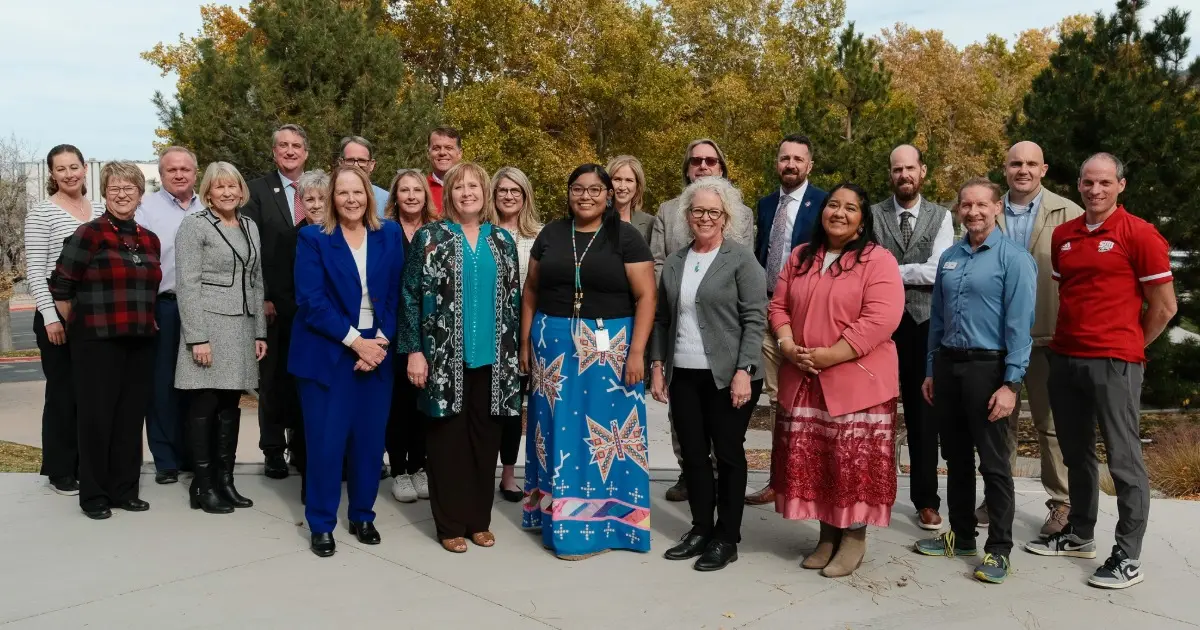 On Thursday, Nov. 13, representatives from the Paiute Indian Tribe of Utah (PITU) and Southern Utah University (SUU) traveled to the University of Utah for the annual Golden Spike Awards, hosted by the Public Relations Society of America, Utah Chapter, in recognition of outstanding work in public relations, marketing, and communications.
The collaborative effort between PITU and SUU on the Paiute Willow Basket Community Assessment earned the two organizations the Golden Spike Award in the category of "Research," which addresses "a meaningful contribution or input to a public relations program, or an evaluation documenting the value or benefit of a public relations program or tactic."
The Paiute Willow Basket Community Assessment is the first comprehensive study on the Paiute Tribe in more than 50 years, capturing the experiences and aspirations of Tribal Members and comparing them with the only other prior Tribal assessment, conducted by the Bureau of Indian Affairs in 1968.
In 1954, the Utah Paiutes were wrongfully subjected to the Tribe’s federal recognition and federal trust responsibility. By 1968, many Southern Paiute families were left living in overcrowded homes or along riverbanks in southern Utah. Medical care was scarce, jobs were limited, and nutrition and sanitation were poor. Life expectancy had dropped to age 42.
“In 1980, our federal recognition was again restored, bringing back benefits and life to our people,” said Tamra Borchardt-Slayton, who is the PITU Puow’wan Program manager and a member of the Paiute Willow Basket research team. “Today, our community has built back, and the Paiute Willow Basket study captures the voices of our community, including our Elders. It tells a story of how far our Tribe has come and where we now want to go.”
A sovereign nation, PITU comprises five constituent bands—the Shivwits Band, Kanosh Band, Koosharem Band, Indian Peaks Band, and Cedar Band—located within Utah’s Iron, Millard, Sevier, and Washington counties. These bands together represent a resilient Tribal community with deep ancestral ties to their respective regions and honor for their cultural traditions and lands.
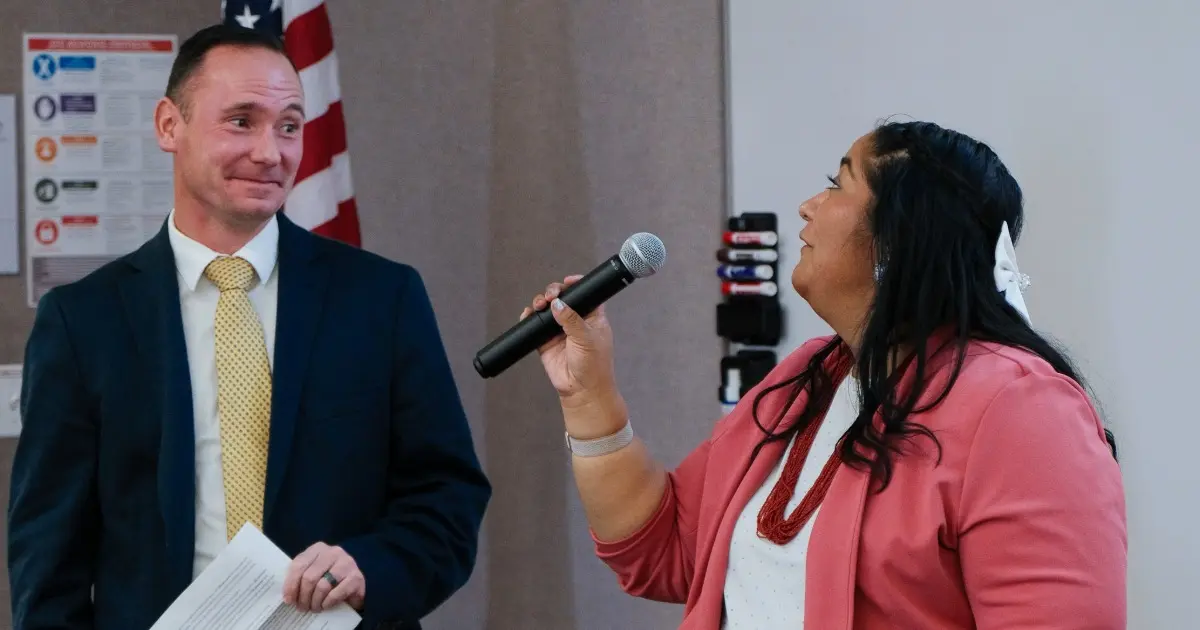 Co-designed by PITU administrators and SUU researchers, the Paiute Willow Basket Community Assessment used Indigenous research approaches and an Elder-supportive process, including offering both online and paper surveys in order to reach as many Tribal Members as possible.
“We wanted to make sure this wasn't necessarily a Western-driven study, but that Indigenous voices were heard and interpreted,” said Borchardt-Slayton, who is also the chair of the Indian Peaks Band.
The findings of the study, which were recently published on the PITU website, will inform strategic planning in health, education, workforce development, housing, and cultural preservation to ensure that programs are community-driven, culturally grounded, and cohesive across all five bands of the Tribe.
With this goal of cohesion in mind, the research team knew it was important to get feedback from members of all five bands, which was ultimately achieved in proportions similar to the populations of the bands, with one outlier. The team was also pleased with the overall response rate: Twenty-six percent of the eligible population took the assessment. Joel Vallett, who holds a doctorate in public policy and administration and is an associate professor in the MPA program at SUU, called the response rate “particularly impressive.”
“When we do this type of community assessment survey, we usually see about 10-15% response at the high end,” Vallett said, adding that the 26% response rate of the Paiute Willow Basket assessment signified to him that the respondents trusted the survey instrument. “They trusted where it was coming from, they understood its value, and they were willing to respond.”
Vallett said the study is an “incredible demonstration of what good public administration can do.”
“We assess where our communities are doing well, where they can improve, and where they can grow,” he said. “As I went through this assessment, I immediately saw that there was a genuine effort to really understand what was going on with the Tribe and being able to make sure their needs were being met and that growth had occurred, especially since it had been such a long time since the last study.”
Key progress indicators identified by the study include a 129% increase in Tribal enrollment between 1968 and 2025, from 397 members to more than 900. The study also showed marked gains in educational attainment, diversification of employment opportunities, and expanded access to health services, including the presence of five culturally responsive FourPoints Health clinics now located throughout the bands’ service areas.
All FourPoints clinics are open to both Tribal Members and the community and offer a sliding-fee scale based on a patient’s income. FourPoints Health Director LaTosha Mayo, who is a member of the Koosharem Band and served on the research team, said the Paiute Willow Basket Community Assessment is more than just numbers compiled together. “It’s a way that our Tribal Members can voice their stories to help us create a better vision for our future.”
From a health standpoint, Mayo said the study provides a roadmap for purposeful action. “When our Nung’wu People are invested in the health of the community, everyone benefits. With their voices and stories, we are able to ensure that each action we take chips away at the hardships and challenges we face as a community, family, or individual. Our Nung’wu People are our community’s greatest wealth, and when we are able to pour into them so they are healthy in mind, body, emotions and soul, they are able to actively participate in building our Tribe’s future for generations to come.”
When it comes to the future, research team members also highlighted the education and employment findings. Forty-three percent of respondents have completed high school, compared with 12% in 1968, and post-secondary education attainment has grown dramatically, with 47% of high school graduates reporting continuing their education, compared with just 1% in 1968.
Additionally, employment has diversified beyond low-wage manual labor roles; 18% now serve in leadership positions, with strong representation in the fields of health care, education, business, and skilled trades.
Vallett noted that several respondents expressed interest in moving into upper management in those career fields.
“In terms of how we move forward with this information, I think about the types of services we can provide in terms of education,” he said, “not necessarily your typical undergraduate degrees, but leadership certificates and stackable credentials that individuals can earn and continue to elevate within their career.”
Melynda Thorpe, assistant vice president of Workforce and Educational Opportunity in the SUU Provost’s Office, took it a step further.
“At SUU, we are dedicated to helping local residents of southern Utah—especially in our rural communities—get access to the training and connections they need to gain a living wage job,” she said, “so when we saw the aspirations of Tribal Members saying they want to have jobs in business management and in health care and be leaders in those fields, it gave me a sense of validation for the work that we are actively engaged in, to make sure that we're designing education that will help our rural communities get there.”
This isn’t the first time PITU and SUU have worked together. The two organizations maintain a longstanding partnership centered on cultural, educational, and health collaborations, including the Southern Paiute Language Preservation Project, FourPoints Health clinic services for students on the SUU campus, and community-based cultural programming.
When it came to the Paiute Willow Basket Assessment, Thorpe said the university put the project into its Industry Challenge Lab, which allows faculty, students, and researchers at SUU to contribute to scholarly or applied research projects that impact communities. For this project, student research assistants represented multiple disciplines including history, social work, business management, communication, and business analytics (MBA).
“The fact that we were able to work with PITU—which is a valued community partner—and to engage our faculty, our staff, and our students to create meaningful research that can be put to use right away by the Tribe is significant to the mission of SUU to be community responsive and engaged.”
Laurel Yellowhorse, the PITU Tribal Chairwoman, expressed gratitude for the partnership with SUU, especially when it came to the community assessment.
“We are grateful for the collaborative opportunity to help gather and sort contemporary data, engage in rich discussion, and together conclude that the Tribe’s greatest strengths remain its culture, its people, and its enduring resilience,” she said. “These vital virtues are the keys to addressing today’s most pressing challenges, and those yet to come. Together, Tribal Members are shaping and weaving the future of PITU programs and services while honoring the past, strengthening the present, and empowering well-being for future generations.”
For more information about the Paiute Willow Basket Community assessment, view the study results.
Contact Information
Brooke Heath
435-586-5400
brookeheath1@suu.edu