
ENGL 2010 Course Topics

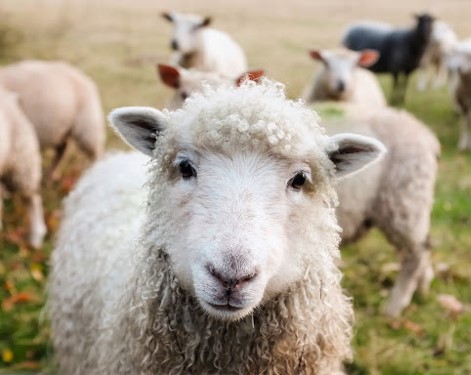
Writing about Animals

Instructor: Natalie Johansen
In this section we will explore the connection between humanity and animals and discuss how that connection has evolved over time. We will analyze viewpoints that challenge the established boundaries between people and animals, leading us to then challenge the ethics of our behavior toward animals. As we study these issues, students will learn how to use persuasive techniques to create their own research-based argument.

Writing about Fans and Fandom

Are you a fan? What does your fandom mean to you? Do you see other people participating in fandoms and wonder why? This section of ENGL 2010 will examine what it means to be a “fan” as well as the influence fans have on sports, music, television, film, and video games. It will also ask questions about what roles fans should play, the ethics of being a fan, and how fans engage with their interests.

Writing about Fantasy

This section of English 2010 focuses on the arguments surrounding fantasy and the ways it functions. Brian Atterbury, in his work Fantasy: How it Works, defines fantasy as ‘the lie that speaks truth’ (8), which opens the doorway into exploring the ways the genre intersects with the concerns and realities of individuals and cultures. We will examine a variety of modern and contemporary short stories from this perspective, and discuss concepts such as politics, representation and identity as they relate to fantasy. This section will consider questions such as: How is fantasy political? Why is fantasy so integrated into popular culture? And why is it important to feel seen by a work of fantasy? Come prepared to discuss the magical and the mundane and change the way you understand the nature of the fantastic.

Writing about Historical Fiction

Have you ever wanted to travel back in time? Do you sometimes question the circumstances that brought about historical events? Historical fiction is not history, but instead is a form of time travel. It is a vehicle for constructing group identity and challenging the established narrative of past events. This section of English 2010 uses historical fiction as a means toward understanding the lessons of the past. You will have the opportunity to read a classic historical fiction novel and relate this reading to a topic of your choice that will guide your research throughout the semester. You will immerse yourself in the historical perspective of this novel, allowing you to come to terms with the challenging problems of the present through reasoning and persuasive writing.

Writing about Monsters

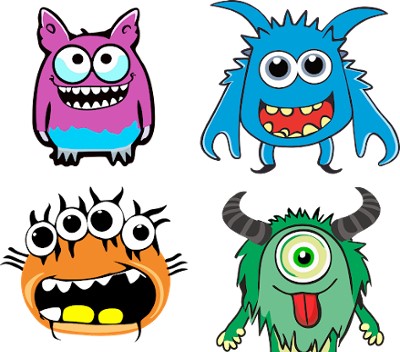
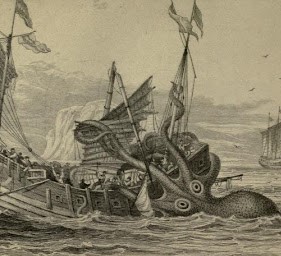
Were you afraid of the monster under your bed? Do you love scary movies? Are you ready for the zombies to come? This section of English 2010 focuses on arguments about monsters and stories about monsters ranging from those told by the Greeks, medieval legend, classic movie monsters and urban legend and their connections to fear, identity, and culture. It should also provide you with perspective on the way cultures and people interpret values because monsters behave differently over time and across cultures.

Writing about Monsters

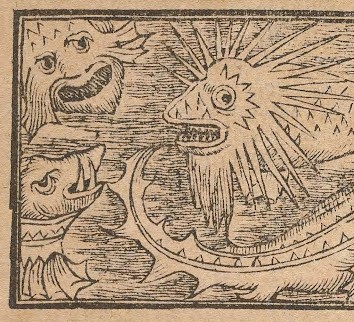
Stories are integral to the human experience. Humans have told stories to explain the world and our own connections to it and each other since the beginning. In this class, we will explore the functions of mythological stories in our lives, including monsters, both literal and fictional, the role of the oral tradition in storytelling, the structure of the hero’s journey, and what makes someone a hero or a monster.

This section of ENGL 2010 uses the themes and structure of mythology and the classification and definitions of mythical monsters to explore how stories play a role in our own lives and how we assign the “roles” of hero and monster and why. The major assignments build on one another to practice the skills of academic writing. Assignments include a flash memoir exploring our own personal connection with monsters, an argumentative paper defining what makes a monster, a detailed proposal/annotated bibliography, and a final 10-page research paper tracing the story of a “monster” from its creation and through the changes that occur with time and shifts in cultures/values, and more.

Image: https://www.biodiversitylibrary.org/page/41862917#page/542/mode/1up

Writing about Myths

Stories are integral to the human experience. Humans have told stories to explain the world and our own connections to it and each other since the beginning. In this class, we will explore the functions of a myth, the role of the oral tradition in storytelling, the structure of the hero’s journey, and what makes a story a “myth”.

This section of ENGL 2010 uses the themes and structure of mythology to explore the roles of stories in our lives and articulate how mythology is used to define the undefinable. The major assignments build on one another to practice the skills of academic writing. Assignments include a flash memoir exploring our own personal connection with myths, a short argumentative paper defining what makes a myth, a detailed proposal/annotated bibliography, and a final 10-page research paper tracing a mythical story or figure from its creation and through the changes that occur with time amd shifts in cultures/values, and more.

Image: https://www.biodiversitylibrary.org/page/18065353#page/389/mode/1up

Writing about Music

This section of ENGL 2010 explores the ways music intersects our lives, including the way we work out, how we think, what music we like, and how music can impact an entire society. In this course, students will explore the moves musicians make within their careers, how messages are constructed with lyrics and musicality, and learn how music can influence much more than most realize.

Writing about Queer Studies

This section of ENGL 2010 focuses on Queer Studies. Queer Studies is an interdisciplinary field that looks at gender, sexuality, and identity. How do we define and understand gender? How do we define and understand sexuality? How do gender and sexuality become part of our identities, our cultures, and our societies? Queer studies scholars work in a range of disciplines from Humanities to STEM. In this writing-intensive course, students will both be introduced to the Queer Studies and hone their academic writing and research skills, including how to incorporate AI into their writing processes.

Writing about Science Fiction

Instructor: Joy Sterrantino

This class discusses the genre of science fiction in literature, film, and television. Science Fiction is made up of stories that are beyond our known world or are an alternative to reality due to the plausible application of technology. Sci-fi is part of a broader genre called speculative fiction which includes dystopian and fantasy, both of which sometimes cross over with science fiction but are not the same thing. Our class will define what science fiction is (and isn’t) and the social and emotional influence it has. We look at its origins, how it has evolved, and how attitudes toward it have changed. We’ll read some short stories and even watch a couple of movies and shows. Students will be permitted to pursue their own interests and niches as they research and argue their perspective on sci-fi. It is not necessary to be versed in any science fiction to take this class.

Writing about the Arts

Instructor: Joy Sterrantino
This class discusses the arts, including the visual arts, theater, music, dance, and film. The arts are the cultural foundation of society. Our class will define what the arts are and the role they play in our lives, as well as the social, physical, and emotional influence they have. We look at subjects such as benefits to society, funding issues, access, and representation. In addition, students will visit a museum or performance virtually. Students will be permitted to pursue their own arts interests and niches as they research and argue their perspective on the arts or one specific art form. It is not necessary to have a background in this topic or know anything about the arts to take this class.

Writing about Shakespeare

The thematic focus of this course is Shakespeare, perhaps the greatest borrower in the English language, and some of the cinematic interpretations his plays have inspired. We will consider different theories of adaptation as a means to understanding the cultural and political significance of responses to Shakespeare’s work.

Writing about the Suburbs

Alcoholics. Domestic workers. Neo-Nazis. Stay-at-home moms. Depressed teens. Such is the cast of characters we’ll discover behind the façade of suburban decorum.

For many Americans, suburbia is where we situate our ambitions for upward mobility and economic security, our ideals of freedom, and our longings for social harmony and spiritual uplift. However, the reality of the suburbs is often quite different: cookie-cutter houses, despotic homeowner associations, keeping up with the Joneses, backbreaking mortgages, and xenophobia. Sadly, the promises and dreams of suburbia are often illusive and unrealized.

Exploring representations of the American suburbs from 1945 to the present, we’ll ask a number of tough questions: Is suburbia a classless place? Are there different types of suburbs? Who’s allowed into the suburbs and who’s kept out? Engaging a novel, a short story, films, and a play, as well as literary criticism and selected historical and sociological studies, we’ll attempt to answer these questions by examining a diverse range of suburban and urban spaces, from the white-collar suburbs of John Cheever’s “The Country Husband,” to the impoverished, cramped housing on Chicago’s South Side in Lorraine Hansberry’s A Raisin in the Sun, to the changing demographics and turf wars of Venice Beach, California, to the final glowing years of the placid Detroit suburbs in Jeffrey Eugenides’s The Virgin Suicides.

Writing about Sustainable Food and Culture

This course builds upon the skills learned in English 1010, reinforcing strategies that foster careful reasoning, argumentation, and rhetorical awareness of purpose, audience, and genre. The course theme is Sustainable Food and Culture and will involve connected writing assignments that culminate in a major research project. In groups, students will develop user guides for various aspects of research and writing. Individually, students will use the course-developed guides to produce drafts of a research paper focused on a topic of choice related to the course theme. At the end of the course, students will compile their work and submit a final portfolio that synthesizes the coursework with a draft of their paper. The final activity is an in-class presentation that reflects on the course goals and achievements with an option to bring in a dish or recipe to share with the class. This class follows an experiential learning model with a focus on in-class discussions and collaborative activities.

Writing about Time

Time is a concept that permeates much of what we do as humans. Without temporal cues, humans the world over experience physical changes. And yet concepts of time vary widely from culture to culture. How do people measure, think about, and write about time? How does the concept of place affect the concept of time? And how have these concepts changed over time? This section of ENGL 2010 focuses on time and the different lenses through which we can think about and write about time. In this class, you will read about time from a variety of authors and perspectives. You will write about time both formally and informally, and participate in a group project about time. Finally, you will explore your own thoughts about time and complete a 10-page argumentative research paper about your own answer to a question about time.

Writing about Villainy

Ideas of “good” and “bad” are essential to how we function as a society and as individuals, but those concepts are also proportionally difficult to define. Who gets to decide who the villains and the heroes are? What happens when we disagree? Our definitions of villainy matter, but our reasoning does, too.

This section of ENGL 2010 uses pop culture and entry-level moral philosophy to explore who gets labeled a villain and why. Major assignments build on one another and include a paper defining villainy according to a specific moral philosophy, a detailed proposal/annotated bibliography, and a final 10-page research paper applying the “villain” label to a character, person, company, idea, or other entity–OR defending a “villain” in an attempt to clear their name.

Writing about Video Games

Instructor: Joy Sterrantino

This class discusses gaming and gamers. Gaming is a multi-billion-dollar industry. With such a wide variety of games and devices available to users, our class will define what a game is and the social, physical, and emotional influence games have. We look at subjects such as addiction, sexism, and benefits in relation to gaming, as well as future technologies in the making. In addition, we look at specific games out there in relation to these topics, as well as watch Let’s Play and Streaming of others playing games and you’ll get to play a little bit yourself! Students will be permitted to pursue their own gaming interests and niches as they research and argue their perspective on games, gaming, and gamers.  It is not necessary to be a gamer or know anything about gaming to take this class.

Back to Top