SUU's Center for Teaching and Innovation (CTI) are committed to providing faculty with high-quality resources they can utilize in their teaching regardless of the instructional modality. The resources below provide general information about different teaching topics, how these strategies can be applied in the classroom, and the potential benefits of utilizing these methods. If you have any additional questions, or would like individual or small group discussions on these topics, you can contact either CTI.
Assessments are used to determine if students are accomplishing set objectives. These resources discuss how to ensure that your assessments are proper for the objective you are trying to measure. They describe the two major types of assessments and how to create effective assessments.
Student success is the primary goal of SUU faculty and staff. Achieving this goal requires a team effort between Academic Affairs and Student Affairs. SUU has a wealth of different resources to support students outside of the classroom, giving students every opportunity to succeed.
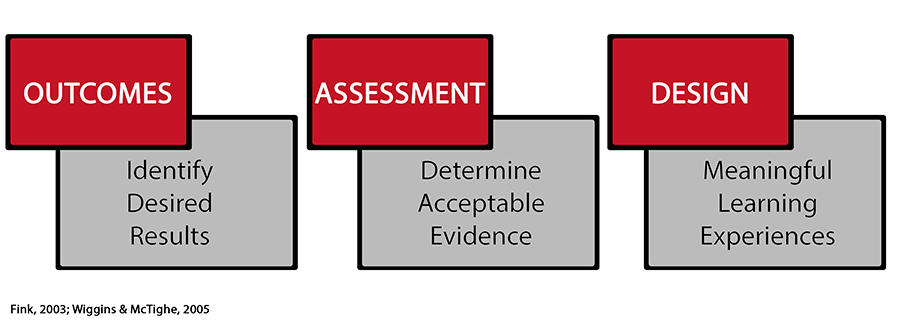
There are multiple design models and approaches to design effective courses. The common course design model that we emphasize at SUU is Backward Design, however you may be interested in other models. Effective course design is a process that includes identifying course level outcomes and developing instructional materials, learning activities, interactions, and feedback and measurement is in place for when the course is active.
Group work can help to enhance students' understanding of materials. At the same time, it allows students to practice skills that are transferable to the working world where collaborative work is increasingly more common. These resources discuss the reasons why you might utilize group work in the classroom, and how to make group work more effective.
Documenting your teaching effectiveness is like telling a story about yourself. Giving students a voice through student evaluations is one important piece of that story, but it is essential to have other pieces as well. Peer evaluations, self reflection, and teaching inventories are just some of the other tools we have at our disposal to not only assess the quality of our teaching, but to make a plan for becoming even better at it.
The goal of classroom discussions is to allow students to learn from each other and to process information in their own words. The following links discuss ways to create more impactful and directed discussions in the classroom.
Online discussions can help students feel more connected to their instructors and fellow students. These resources will help to ensure that you are able to generate true discussion in the online space. They discuss how to create questions that enable discussion, and how to set standards for students participating in discussions.
A flipped classroom strategy can be accomplished in many ways. In general, the goal of a flipped classroom is to have the students engage with learning materials before coming to class. This allows in-class time to be dedicated to harder problem solving, working in groups, or receiving feedback from instructors. This gives students better access to each other and the instructor when engaging with higher-level cognitive activities while getting immediate feedback.
The Association of American Colleges and Universities (AAC&U) has identified 11 High Impact Practices (HIPs), which have been shown to improve student learning while increasing graduation and retention rates. While all students benefit from experiencing HIPs, traditionally underserved students show higher gains. Thus, HIPs have been effective at closing achievement gaps, and are important tools for making the learning environment more equitable.
The social environment of a classroom can have a significant impact on student learning. A welcoming, respectful, and inclusive setting gives students a sense of belonging and reduces many barriers to learning that exist.
"Presence in this context also considers student perceptions of instructor involvement as a central factor. High levels of engagement, studies indicate, lead to higher levels of student achievement, greater likelihood of graduation, and deeper satisfaction” (Oblinger, 2014, p 14)." Promoting Instructor Presence in online courses can be challenging. Unlike face-to-face courses, online courses are asynchronous, resulting in a time delay between communications. There are a number of ways, including the use of technologies, that an instructor can increase instructor presence and engagement while reducing transactional distance. The resources below will assist you with gaining a better understanding of instructor presence, the Model of Inquiry, and transactional distance.
Learning Objectives and Outcomes are statements that describe the specific knowledge, skills, or abilities that students should be able to demonstrate as a result of completing the course or module/unit of the course. Providing students with learning objectives and outcomes will assist them in understanding what they should be focused on during the course or specific module/unit of the course. As you will see in these resources, learning objectives should not simply specify an assignment to be completed or a module to-do list. With this in mind, learning/module objectives are demonstrated through the assignments provided in the course. All learning/module objectives should align with course outcomes and course outcomes should align with the program outcomes. The following resources will assist you with how to write measurable course goals and learning objectives.
Rubrics are a great way to provide efficient, consistent, and objective feedback to students. They can also provide transparency to students regarding the expectations placed on them for the given assignment. Rubrics are often in a matrix format providing detailed descriptions and point values. By letting students know how they will be evaluated before they start a given assignment, they will have more opportunity to fulfill the highest level of expectations. This tool can also help reduce potential confusion on how the instructor will evaluate a student’s work and build more trust between the student and the instructor, regardless of the modality (face-to-face, hybrid, or online). The following resources will assist you with creating and implementing high-quality rubrics within your courses.
Personal Response Systems, Learning Management Systems, social media, online content, computer simulations - the options for using technology in the classroom seem endless. Like it or not, technology is here to stay, and there are powerful tools available to help improve student learning. Just like anything, the key is to know what to use, when to use it, and most importantly, why to use it.
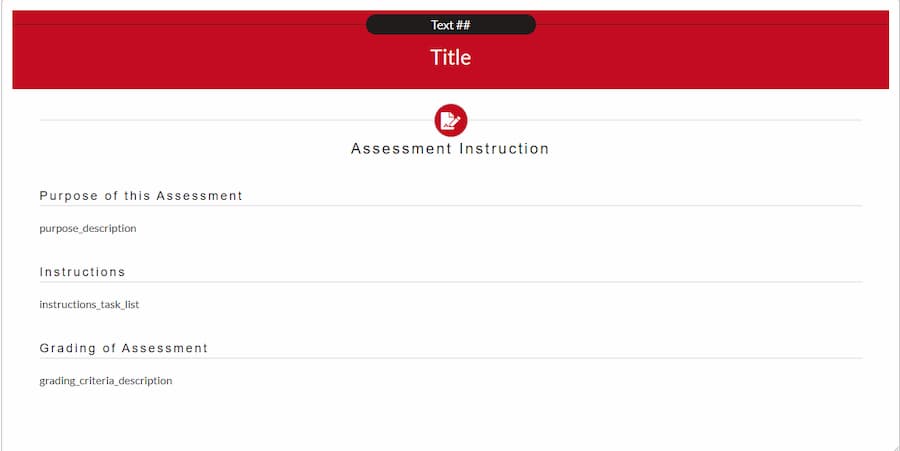
Transparent teaching helps students understand why and how they are learning course content and completing activities. Transparency provides a clear and defined path to success for all students. Clear grading criteria or a well-defined rubric in advance of the grading allows students to self-evaluate that they are meeting the expectations that were set. Examples of what an excellent submission looks like also provide further clarity.
Here is an example of our template that is ready to use in Canvas. The template follows transparency model of Purpose, Task, Criteria.
Writing a Syllabus
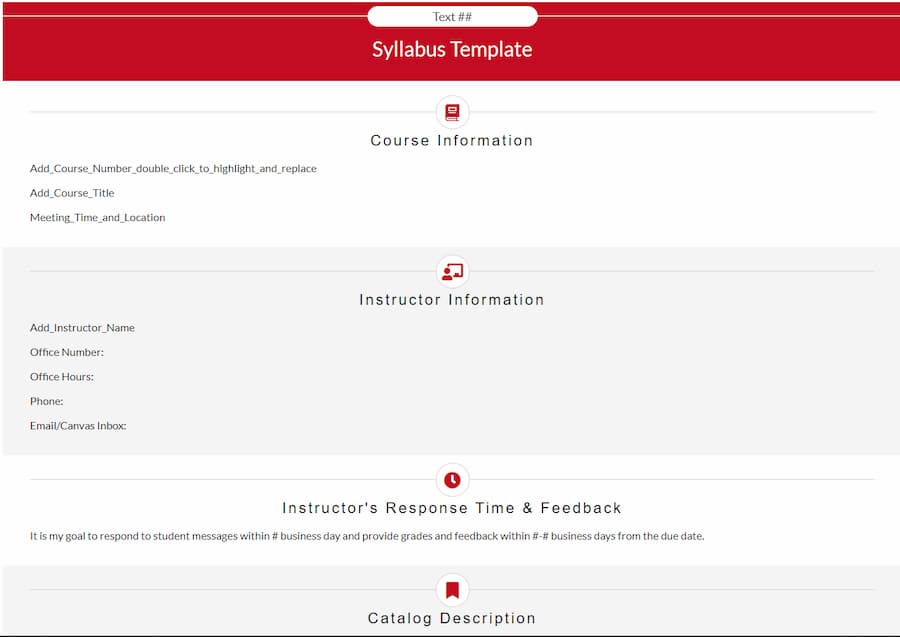
The syllabus sets the tone for the course. It provides a way for students to know what to expect in the course, how they can succeed in the course, their responsibilities, and instructor responsibilities (i.e. in how many business days students can expect feedback on assignments). The syllabus also contains school policies and resources that allows students to know what is expected of them at an institutional level (i.e Academic Integrity) and where to go for assistance outside of the classroom (i.e. IT support, Canvas support).