Everyone wants to live a good life; to live well. Despite this seemingly universal desire, any number of people seem to just go through the motions, doing things because they feel a vague social pressure to do so. In philosophy, we critically examine fundamental assumptions about the world, ourselves, ethics, politics, knowledge, and what it means to live a good life with an eye not just toward finding the Truth, but with special attention to cultivating the sorts of people who have the intellectual, civic, and moral characters necessary to thoughtfully engage with the world and to live what Socrates called, “the examined life.”
Whether in our classes, in the philosophy club, through the undergraduate philosophy conference, or just in the halls between classes, SUU philosophers are part of a vibrant, supportive, and collaborative intellectual scene and are together dedicated to working toward finding good answers to challenging problems.
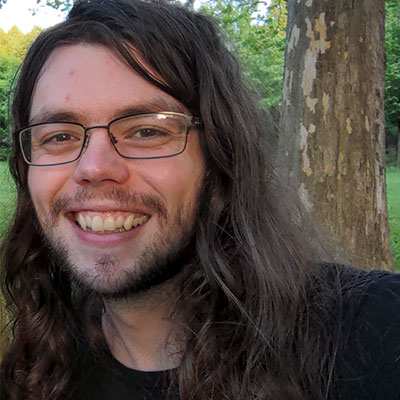
Carl Anderson is a 2021 phil program alumnus. His favorite courses were Ancient Greek, Ethics, and Possibility and Necessity.
He currently works as a software developer in Healthcare IT, where he uses his education daily. Philosophy has helped him stay patient while reading dry but important texts, hold a dialogue with people who approach problems in a different way, and balance charity and scrutiny when reviewing other people's work.
Outside of his job, his education has helped connect his inchoate questions about value, knowledge, and language to a history of careful thinkers. After graduation, he has been reading Alasdair MacIntyre and Hans-Georg Gadamer. Carl looks forward to studying Greek and Latin again, which, as Fitz likes to remind his students, can be fun even if you're unaware of it.
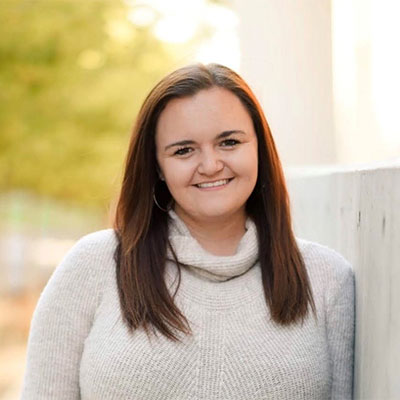
Kaleigh Bronson-Cook ('20)
I graduated from SUU in 2020 with my degree in Philosophy and minors in Psychology and Women and Gender Studies. I began my career at Canyon Creek Services, a community based domestic and sexual violence service agency located in Cedar City and discovered my passion for social work. In my role at CCS I worked directly with survivors of intimate partner and sexual violence and led prevention programs and initiatives including serving as the co-chair of the Utah Domestic Violence Coalition's Public Policy Committee, presenting at statewide conferences and being named Youth Citizen of the Year by the Cedar City Chamber of Commerce.
I am currently enrolled in the Masters of Social Work program at Boston University, one of the top 10 social work programs in the country and am completing my advanced field placement at the Center for the Prevention of Abuse and Neglect at the University of Oregon where I am a part of innovative research on effective child abuse prevention strategies.
I am so grateful for my experience in the SUU Philosophy program as it uniquely prepared me for graduate school and academic research. Even though social work is very different from Philosophy as a discipline, the skills I learned in the program including how to engage with difficult material, think critically about complex issues and express myself clearly through writing have all been crucial. The support and mentorship I experienced in the Philosophy program was unparalleled and I am so profoundly grateful for how the program prepared me for graduate school, my career and life after graduation.
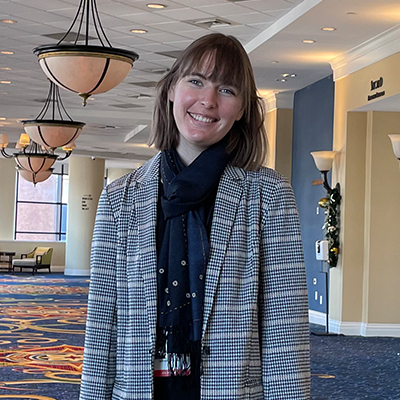
Emily Lemmon ('19)
I attended Southern Utah University from 2014-2019 and majored in both Philosophy and Spanish. I loved my experience studying Philosophy at SUU and I think that my undergraduate professors are some of the finest professors from which I have ever had the privilege to learn. After completing my undergraduate studies, I applied to graduate school and was accepted as a Ph.D. student to the University of Iowa.
I have successfully completed all my graduate coursework and I am now working on my dissertation prospectus. During my studies so far, I have been invited to present my work at five national and international academic conferences and have had one of my papers on intersections between philosophy and literature published in conference proceedings. I am a primary instructor for an introductory logic course and have also been a teaching assistant for a Meaning of Life and a political philosophy course.
In terms of service, I volunteer with the Iowa Lyceum, which is a free academic summer camp that introduces philosophy to high school students (and a sister program of SUU’s Utah Lyceum). I am currently the director of the Iowa Lyceum and I am working to expand the reach of the program to South American countries. I am also serving as the chair of the Minorities and Philosophy chapter at the University of Iowa and I am organizing a graduate conference.
None of what I have accomplished would be possible without my philosophical education from SUU. At SUU I discovered my passion for philosophy, was encouraged and supported by the excellent professors in the department to grow as a philosopher and to pursue graduate school, and received rigorous training in each of my classes. The skills that I developed as a student at SUU have served as a strong foundation for my continued studies and my developing teaching techniques. I unreservedly recommend studying philosophy at SUU to anybody who is interested in growing as a scholar.
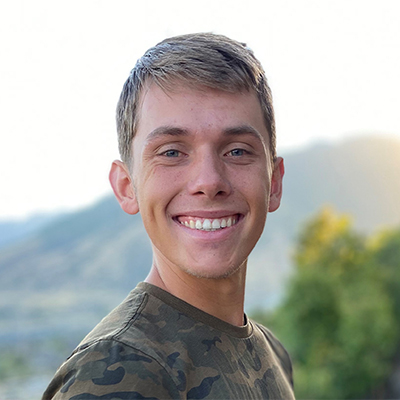
Colby Meline ('22)
Colby Meline is a 2022 Philosophy program alumnus. In the program, he enjoyed studying Greek and Formal Logic with Fitz, Metaphysics with Kris, Political Philosophy with Dr. E, and Nietzsche with Jordan Shonberg.
Since graduating from the program, Colby has been studying at the University of Texas – Austin in the Master of Information Technology and Management program. His coursework includes fullstack web development, machine learning, embedded systems, and much more.
As the great Carl Anderson once said, "Philosophy [helps one to] stay patient while reading dry but important texts, hold a dialogue with people who approach problems in a different way, and balance charity and scrutiny when reviewing other people's work..." (2021). Colby has found that studying philosophy pairs wonderfully with computer science, since both consist largely of abstraction and problem decomposition. Studying formal logic also helps him in his field because, just like formal logic, writing and interpreting software is essentially a matter of translating natural ideas and language into a symbolic notation. In a social context, Colby believes that philosophy greatly expanded his ability to give and receive criticism in a constructive way, which is the heart and soul of activities like code review, pair programming, and working as one engineer on a team.
Colby still enjoys reading philosophy, recently finishing Nadler's Think Least of Death, with Plato's Laws on the horizon. In Spring 2023, he will be joining H-E-B as a software engineer. After graduation, he hopes to return to Utah and begin his career as a backend or fullstack software engineer.
Angie Nickerson ('19)
I attended SUU from 2014-2019. In this time, I earned a bachelor’s degree in philosophy and a master's degree in public administration. I also ran track and field/cross country. I now live in Flagstaff, Arizona. I am a professional runner for McKirdy Trained and an online running coach, where I work with around 45 athletes.
There may not be obvious parallels between philosophy and coaching, but the skills I acquired while studying philosophy have become a huge asset in my career. My job can pretty simply be broken into two parts: 1) Writing and evaluating training and 2) Communicating with and supporting a person in their training.
In philosophy, we look at a person’s system of thought/argument and then form an opinion about them. Do I disagree? Why might that be? What do I think this person got right? Just like a student studies a philosopher’s arguments, I study a professional coach’s training principles. Philosophers like Paley and Hume offered different teleological arguments; coaches like Daniels and Lidiard offered different theories for training. My job requires me to know these theories and then apply them to individuals. However, these theories were generally framed for professional athletes training in “ideal conditions,” meaning they can dedicate 10-15+ hours towards training spread over 7 days. I don’t work with many people who have these “ideal conditions.” I work with people who have busy families, intense jobs, and other life responsibilities that come before running. So it becomes my job to fit training principles to real life people in a way that is both safe and conducive to helping the individual get the most out of the work they put in. Studying philosophy helped me to become a more critical thinker so I have the skillset to tackle these problems.
My degree in philosophy has also given me the skills to articulate and defend my ideas. The people I work with are generally engaged in their training, as they have made a big investment in hiring a coach. With that, I need to be able to explain the thought behind the training that I write. Oftentimes the people I work with will come to me with things like “I saw on Instagram that I should be doing X” or “My runner friend is doing Y and I am doing Z, why is that?” I need to be able to defend my training and back it up with solid reasoning and evidence. I also need to be open to listening and adjusting based on the feedback I receive. The exams, discussions, papers, etc. that were part of my philosophy degree helped set me up well for communicating my thoughts effectively.
With more space, I could certainly come up with many examples for how my degree has been useful for me. Overarching point is, I am grateful for the education I received at SUU and the professors that helped me gain skills valuable for life and the workplace!
Savannah Robinson ('21)
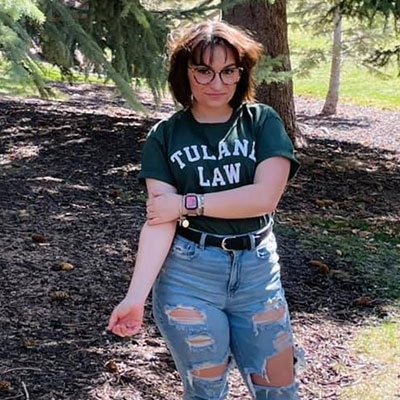
After graduating with a B.A in philosophy I went on to attend Tulane Law School to get a legal education. It became immediately clear to me how my degree in philosophy put me above my classmates when it came to the law school/grad school transition. Many students were stressed and feeling overwhelmed with the amount of reading assigned for each class as well as the content of the reading. I found the course load to be very manageable and even comparable to what I would have to read for class during undergrad. Not only did the amount of reading not seem overwhelming but the content was much easier for me to digest than it was for my other classmates. Reading casebooks for the first time is hard. You are learning a new writing style, vocabulary, run on sentences, and arguments. I found that the reading for my philosophy degree made this process of transitioning into legal text much easier for me. I was used to long complicated, sometimes unorganized, arguments and reasoning when reading philosophy. While my classmates were drowning with managing the readings I found myself feeling as if I could already tread water. We all eventually learned how to swim but the transition and learning process took longer for others.
My philosophy degree had also prepared me for the writing aspect of law school. Lawyers are notoriously bad writers because they fail to organize their arguments and fail to define terms that they use every day. I found legal writing to be somewhat intuitive to what I learned in undergrad. Define your terms, state your argument, list the premises and explain them, then conclusion. I have also found that philosophy has made me very aware of the power of language in laws and how one word can change the meaning of an entire statute.
So, to the current SUU philosophy students. As you sit in your chairs during class and find yourself feeling lost and not understanding how this degree is preparing you to enter the workforce or grad school, I am here to tell you that you will find yourself head and shoulders above your fellow colleagues and classmates. The study of philosophy trains your brain to think differently, and by doing so you learn to see the world in the shades of gray. I promise that the education you are getting is the best you can get. While you might not notice as you surround yourself with other philosophy majors, I promise your philosophy education makes you stand out from the rest. Remember that education is intrinsically valuable. You are doing amazing things, just keep pushing through this degree and you will see how freeing it is to have this education.
Linnea Saltz ('20)
Growing up in Las Vegas, Nevada, Linnea earned her bachelor's degree in philosophy and economics from Southern Utah University in 2020. She then pursued her Master’s in Public Relations and Corporate Communications from Georgetown University where she focused on private to public relationship building in government affairs work.
Since moving to Washington DC, Linnea has pursued a career in government affairs as an associate lobbyist. Originally working for a trade association, she focused on policy surrounding energy, immerging technologies, transportation, and infrastructure. Recently, Linnea has moved jobs and presently works for Dentons Global Advisors, which is the government affairs and communications arm of Dentons, the largest law firm in the world. Now having a more expansive network, Linnea has pivoted her focus and works mainly on criminal justice reform, advancing financial literacy in underserved communities, and expanding capital to underbanked communities.
Linnea has worked across a range of client driven issues and has helped various corporations, industry associations, and non-profit institutions shape legislative, regulatory, and the federal marketing processes. She works with clients to amplify their policy objectives by actively engaging outside stakeholders as well as congressional leaders to help advise strategic initiatives. However, all of this would not be possible without her background in philosophy. Linnea credits her critical thinking, problem-solving, and articulation skills to her time spent within the SUU philosophy program. It was here that she was able to challenge her original way of thinking and learned to evaluate arguments from both sides of the dispute which has proven quite helpful when dealing with DC politico’s. Skills learned though philosophy such as analytical thinking, and concise writing are highly desirable and transferable in the world of government affairs. In the fast-changing business of politics, Linnea’s learned abilities in reading, reasoning, and adapting have been critical to her successes.
Linnea implores everyone to not only take philosophy courses at SUU, but to be as active as possible with this program. Linnea says that not only has philosophy helped shape her professional career path but has positively set her apart from the rest of her counterparts.


 Philosophy Program