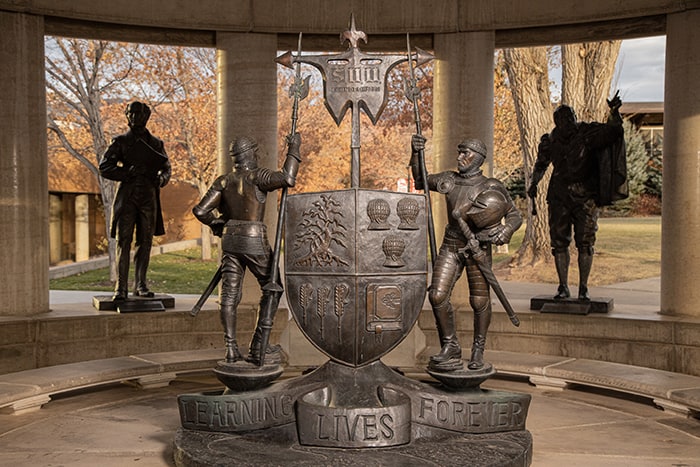
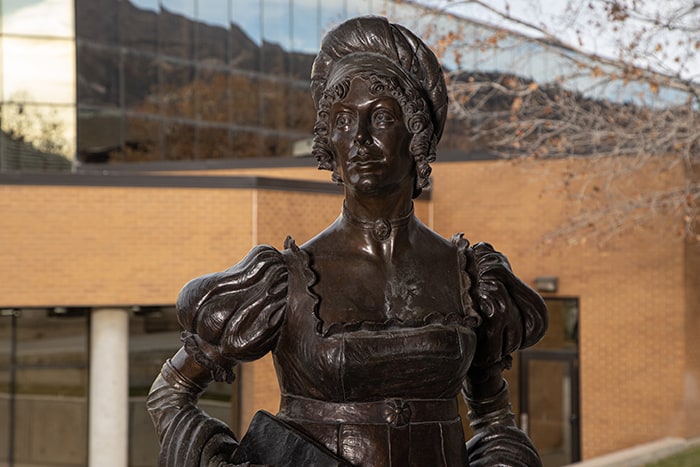
A gift to the University to commemorate the 100th anniversary of the founding of Southern Utah University in 1897, The Centurium speaks to the origins and purpose of the University and the power of education.
The men and women whose statues stand in The Centurium have, through their devotion to the life of the mind, forged new and better paths for the generations of the future. Admired and esteemed for their intellectual contributions, they continue to foster the development of learning, many hundreds of years beyond their own lives and times. The contributions made by these intellectual giants reflect the motto of this University: "Learning Lives Forever."
Dr. Eugene T. Woolf, former Director of the Grace A. Tanner Center for Human Values, assisted in the selection of the twelve historical figures from Western civilization represented in The Centurium. He subsequently wrote a book about these eminent men and women, The Odyssey of the Mind, A Voyage of Discovery, published by Southern Utah University Press. It is available for purchase from the SUU Bookstore.
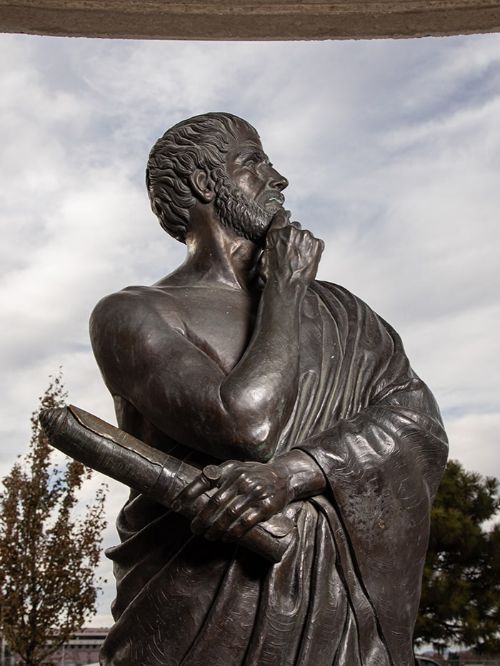
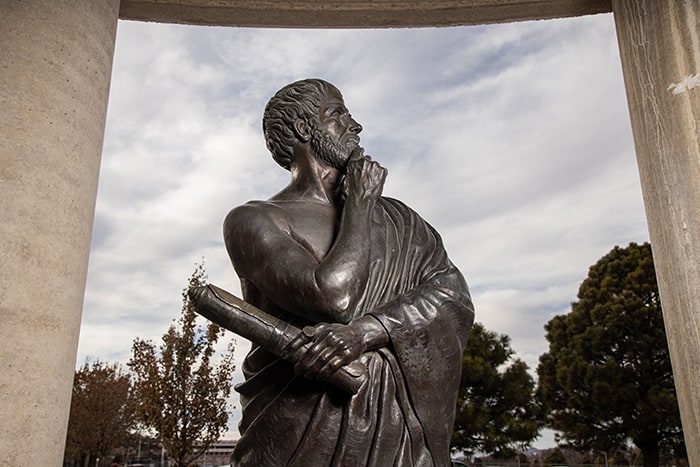
One of the greatest figures in the history of thought, Aristotle, more than any other person, determined the direction and form of Western intellectual history. Driven by a desire for knowledge, he mastered every field of learning known to the Greeks, including physics, chemistry, biology, zoology and botany; psychology, political theory and ethics; logic and metaphysics; history, literary theory and rhetoric. He invented the science of logic and biology.
His influence has permeated the work of scientists and philosophers through the ages. In philosophy, he has profoundly affected the chief tenets of Stoicism, Epicureanism, Neo Platonism, Gnosticism, and Scholasticism - in fact, all the philosophical systems developed by medieval and modern thinkers. His writings were translated from Greek to Latin; to Italian, French, English, and German. No thinker except Plato contributed so much to learning. No thinker after him has rivaled the great diversity of his accomplishments.
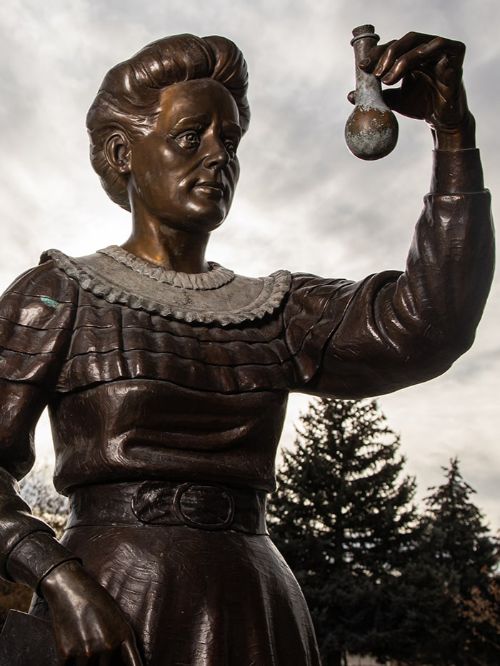
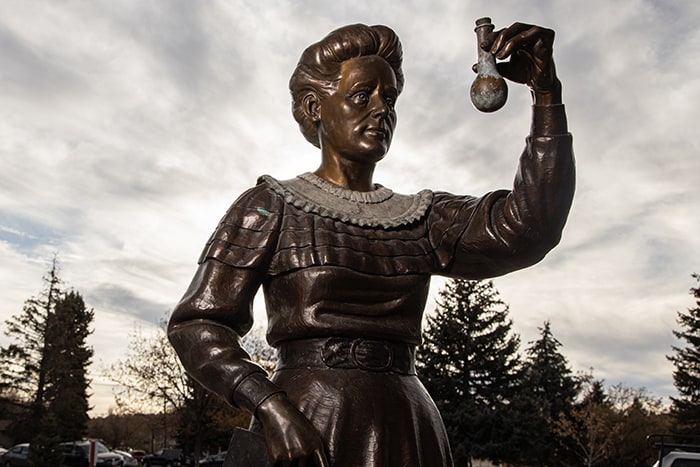
Marie Curie
1867-1934
Marya Sklodovski was born into an impoverished intellectual family in Warsaw, Poland. She excelled in physics and mathematics at the Gymnasium and was awarded a gold medal upon her graduation at age 16. In 1891, she enrolled at the Sorbonne in Paris under the name Marie Sklodovska. In 1893 she came in first in her master’s examinations in the physical sciences. The next year she placed second in her examination in the mathematical sciences. In 1895 she married Pierre Curie, a French Physics professor at the Sorbonne. Their experimentation led to the discovery of polonium and radium. Marie received her doctorate of science in 1903 and that same year she and Pierre shared the Nobel Prize in Physics with A.H. Becquerel for the discovery of radioactivity. In 1911 Marie Curie was awarded the Nobel Prize in Chemistry for the isolation of pure radium. Her work paved the way for important subsequent discoveries by nuclear physicists and chemists.
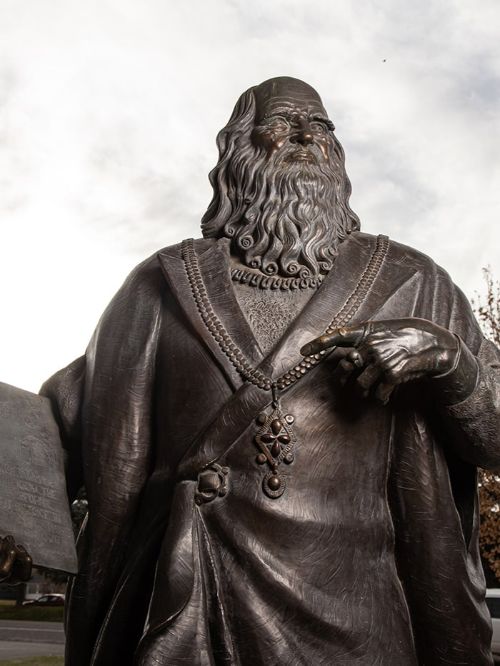
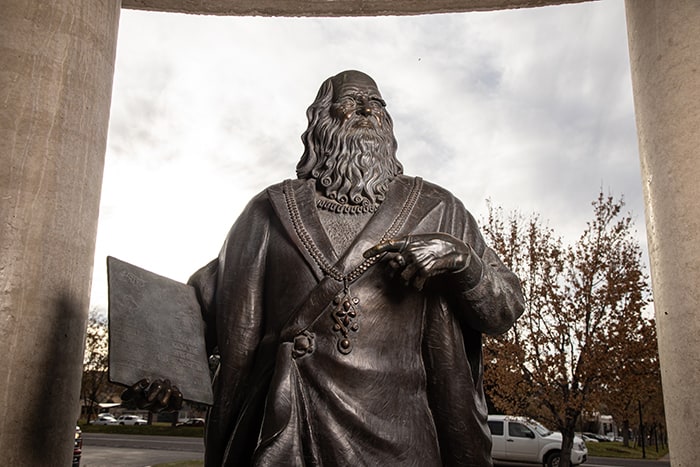
Leonardo DaVinci
1452-1519
Leonardo was the foremost genius of the Italian Renaissance, and perhaps the most versatile genius that ever lived. He explored all the fields of human knowledge that were available in his time, inserting his superb intellect into every realm where graphic representation is used - including painting, sculpture, architecture, and engineering. His uncanny power of observation is revealed in his mastery of the art of drawing. He possessed an exceptional grasp of anatomy, astronomy, botany, and music. He designed and constructed numerous machines and drew plans for hundreds of inventions, including a flying machine and a parachute. His greatness was recognized by his contemporaries, and no generation since his time has failed to pay tribute to him. Pre-eminently a painter, Leonardo’s “Mona Lisa” and “The Last Supper” rank among the most popular works ever painted.
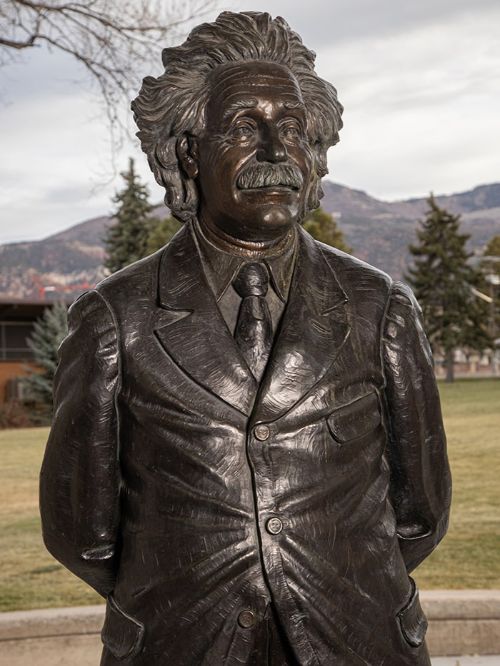
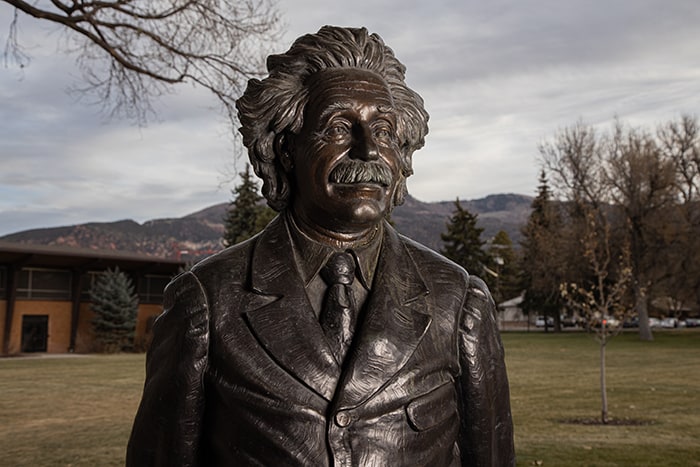
Albert Einstein
1879-1955
A solitary and serene Genius, Albert Einstein is, by most accounts, the greatest theoretical physicist who ever lived. His contributions to man’s understanding of the universe are without parallel. More than any other scientist, he represents the embodiment of pure thought. His remarkably intuitive mind yielded theories which revolutionized scientific thought and changed forever our notions of space, time, motion, and the structure of the universe. His fame is based chiefly on his theories of special and general relativity, statistical physics, and the photon theory of light for which he received the Nobel Prize. He also played a significant role in the emergence of quantum mechanics. The last 30 years of his life were spent in a fruitless quest to combine electromagnetism, the nuclear forces, and gravitation into a single equation. He was recognized for his devotion to world peace and disarmament, and was committed to the causes of Zionism, liberalism, and humanism.
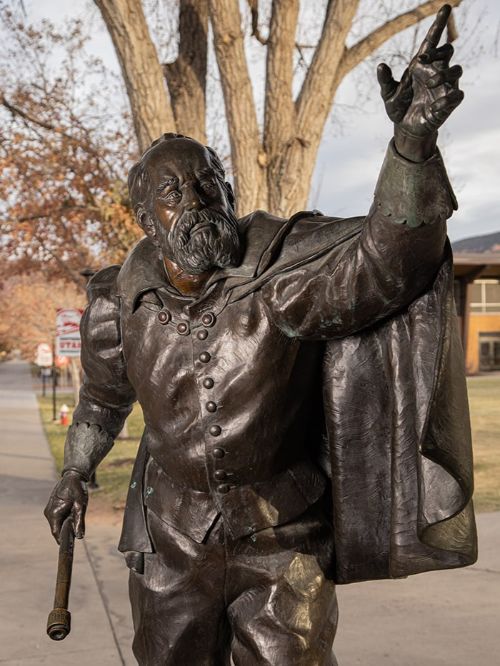
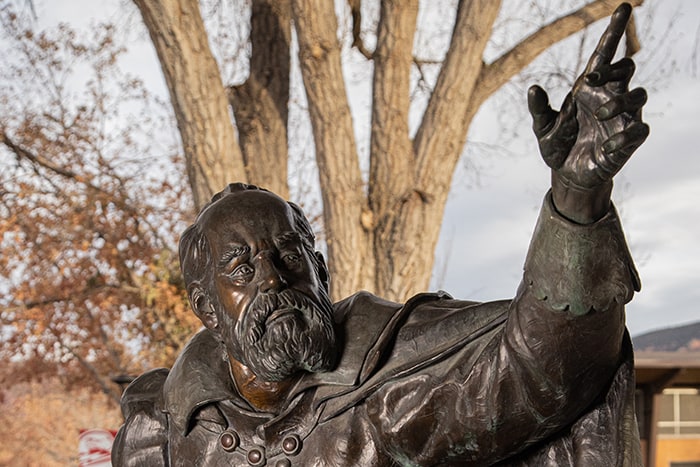
Galileo Galilei
1564-1642
Galileo Galilei, Italian mathematician, astronomer, and physicist, is responsible for several important contributions to modern scientific thought. When, in the autumn of 1609, Galileo directed his 20-powered telescope at the moon, he became the first man to use the new instrument to study the skies. His discoveries proved that the earth revolves around the sun and is not the center of the universe as was commonly believed. Galileo’s ideas were condemned as heretical and he was tried by the Commissary of the Inquisition and sentenced to house arrest for the remainder of his life. Because of his work in gravitation and motion and in attaching mathematical analysis to experimentation, Galileo is often referred to as the founder of modern mechanics and experimental physics. He championed the view that the most significant aspects of science were its method and its criterion of truth.
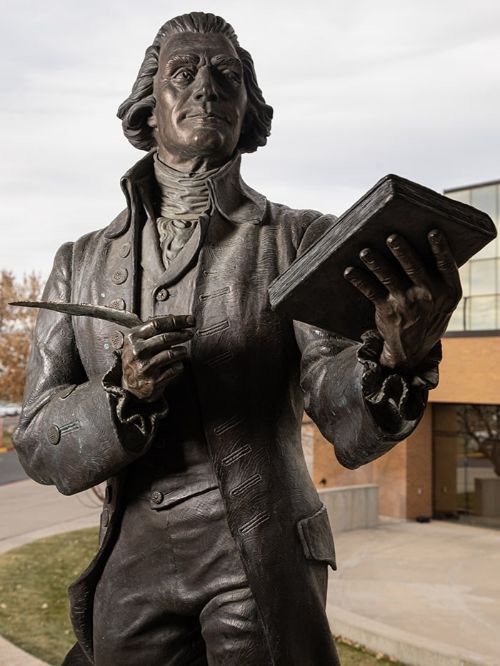
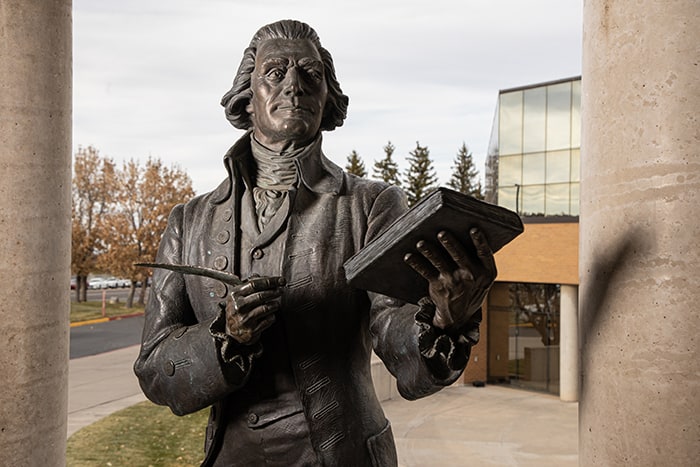
Thomas Jefferson
1743-1826
Perhaps the most versatile of America’s founding fathers, Jefferson devoted 40 years to public service, serving as a member of the Virginia Conventions, the Continental Congress, the Virginia Legislature, Governor of Virginia, delegate to Congress, minister to France, Secretary of State, Vice President and President of the United States. His knowledge of various sciences, poetry, linguistics, education, music, art, and architecture greatly influenced American culture. His private library of more than 6,000 volumes became the basis of the Library of Congress. He wished most to be remembered as the author of the Declaration of Independence, the Statue of Virginia for Religious Freedom, and for his contribution to education. He was the father of the American public university. Ever vigilant in the cause of freedom, he declared, “I have sworn upon the altar of God eternal hostility against every form of tyranny over the mind of man.”
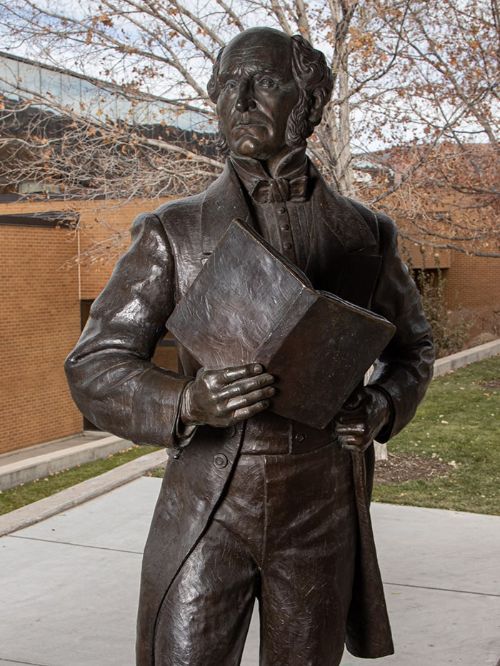
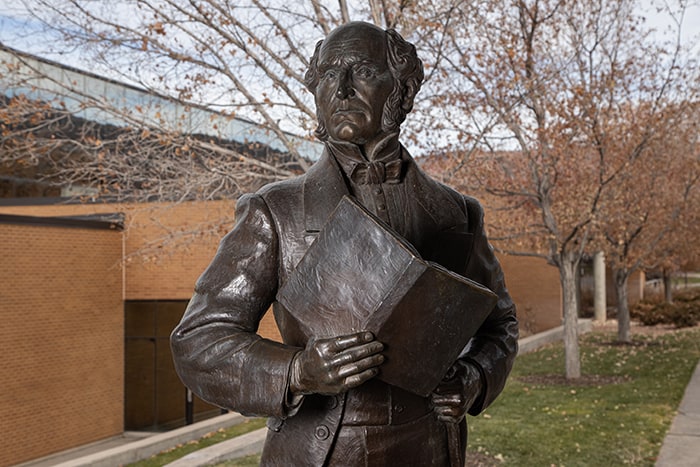
John Stuart Mill
1806-1873
Most commonly thought of as a philosopher, logician, and political economist, John Stuart Mill is one of the major intellectual figures of the 19th century, and is one of the most enduring and indispensable writers of his time. He never attended any school or university, but was educated at home and in France by the stern discipline of his famous father James Mill. He was taught Greek at the age of three, Latin and arithmetic at eight, logic at 12, and political economy at 13. After a visit to France, his studies included history, law, philosophy, and a host of other subjects of personal interest to him. He wrote several books of great importance. His autobiography and On Liberty are included in every list of “Great Books” drawn up as recommended reading. On Liberty, published in 1859, has never been out of print. It eloquently defines and defends the freedom of the individual against unwarranted social and political control.
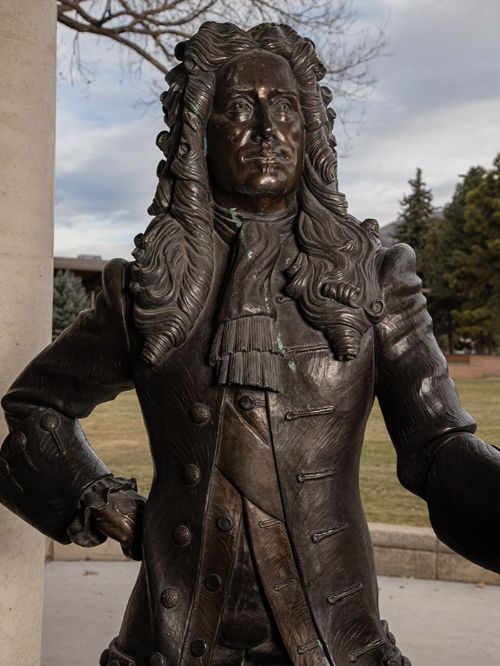
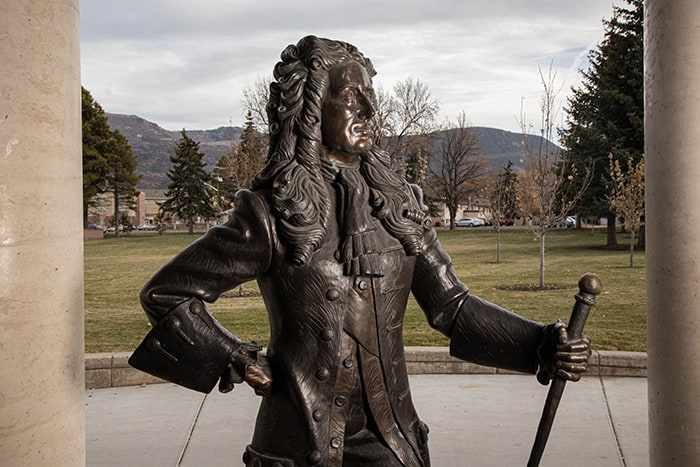
Isaac Newton
1642-1727
Isaac Newton is one of the most important figures in the entire history of science. His originality, scope, and importance went beyond that of any other man of his time. By his laws of motion, his theory of universal gravitation, his studies of light and color, and his contributions to calculus, he reorganized the study of the physical universe. His two chief works, the Principia and the Opticks, remain masterpieces of scientific literature. By common consensus, Principia is the most influential work that has ever appeared in the field of mathematical physics and Astronomy. A supreme thinker, Newton Possessed, in an exceptional degree, an aptitude for intellectual inquiry of every kind - that of a lawyer, historian, and theologian, as well as mathematician, physicist, and astronomer. His work has inspired generations of men and women who recognize his unparalleled genius. Newton continues to serve as a supreme example of the power of the human mind to bring order to our observational and material universe.
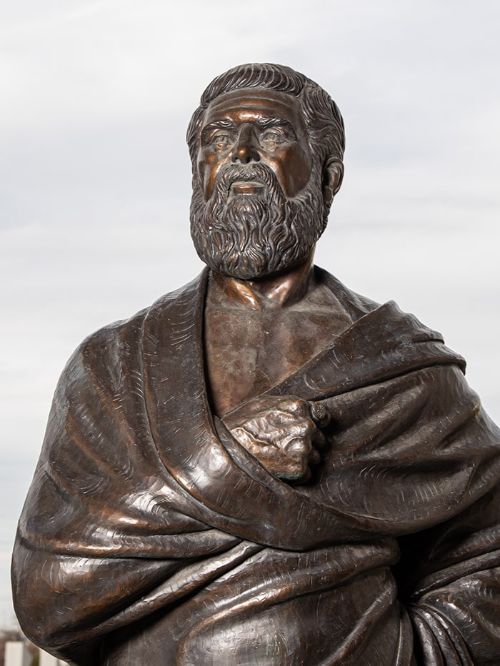
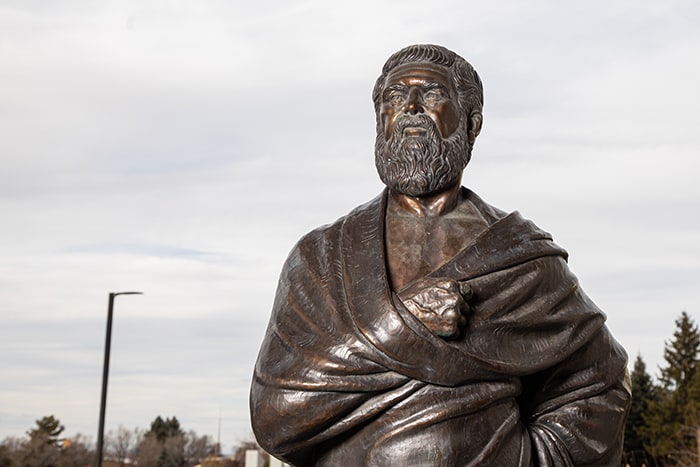
Plato
427-347 B.C.
Throughout the entire course of Western civilization, Plato’s influence as a thinker and writer has been greater than that of any other historic figure. Along with Socrates and Aristotle, he laid the foundations of Western culture by providing a brilliant and penetrating account of man’s moral and political character. The force of his philosophy resulted in the establishment of numerous Platonic schools of thought, which, over the centuries, were devoted to different interpretations of philosophy. Plato believed that the highest natural faculty of man was reason, which was sufficient to reveal the intelligibility underlying the sensible and supersensible worlds of appearance and reality, and to provide the means of achieving the good life, individually and politically. Plato’s Academy is generally considered to be Europe’s first university. Attracting students from all parts of the Mediterranean world, it remained in existence for 900 years.
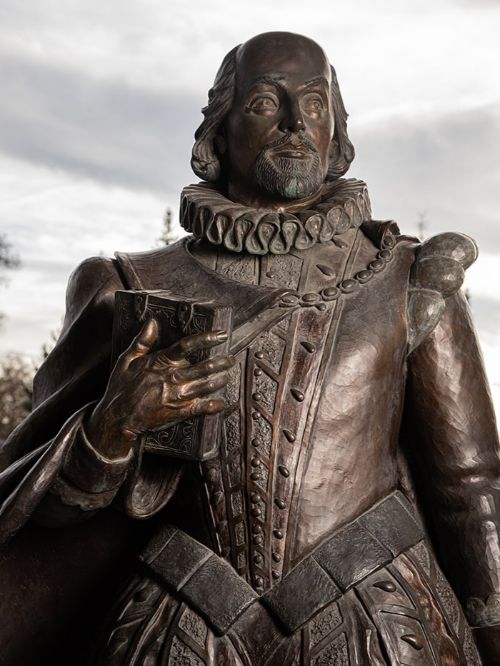
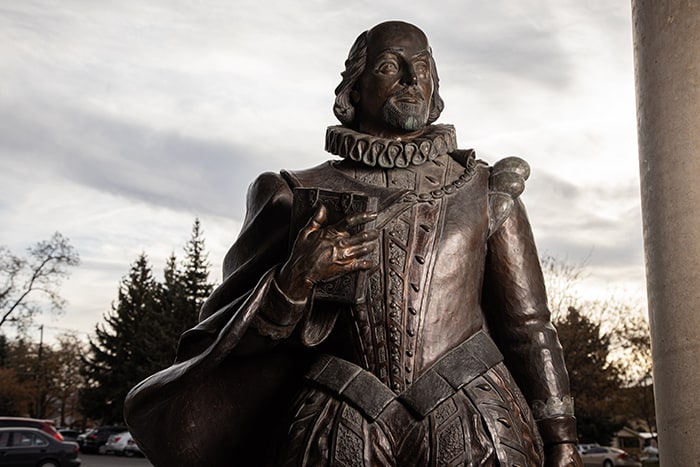
William Shakespeare
1564-1616
No one is more highly regarded as a writer than William Shakespeare. He is generally considered the greatest dramatist the world has produced, and one of the finest poets in the English language. His plays have been produced over more time and in more places than those of any other playwright, lending truth to the prophecy of a contemporary: He was “not of an age, but for all time.” His talent for telling a story was unmatched. His fluid use of expression reformed the English language by increasing the vocabulary and adding to the flexibility of the use of poetry and prose. His remarkable gift for capturing words to express an idea has made him the most quotable author who has ever lived. His profound knowledge of and interest in human nature has resulted in a list of characters from kings to clowns who are capable of infinite interpretation. And it is the recognition of the permanent in human nature that gives Shakespeare’s characters their perennial appeal.
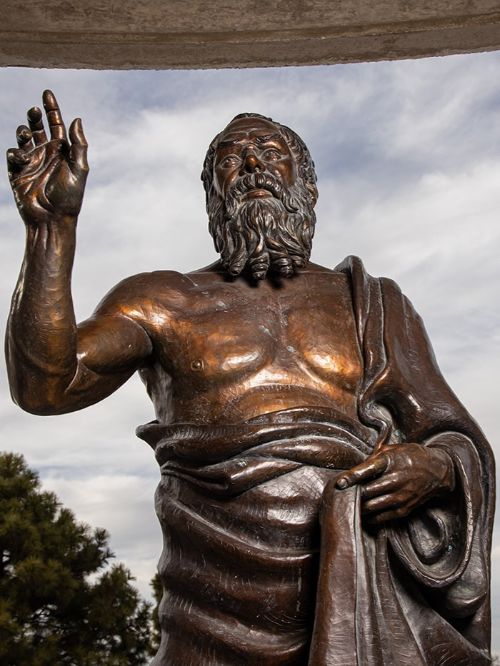
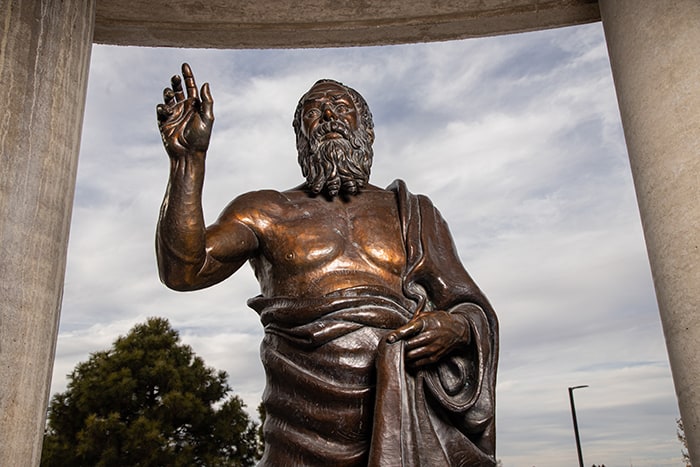
Socrates
469-399 B.C.
Socrates was one of the most original, influential, and controversial philosophers of the Greek World. He spent his life in Athens conversing with people of all classes, seeking true knowledge (knowledge of self), and exposing the ignorance of those who claimed to have wisdom. His persistent questioning was viewed by the authorities as undermining Athenian values and undercutting the authority of those responsible for the education of the young men of the city. Accused of heresy and corrupting the youth of Athens, he was found guilty and sentenced to death by poison in 399 BC. Socrates was the first philosopher to make a clear distinction between the body and the soul. His work marked a decisive turning point in the moral and intellectual history of the West. His teachings, combined with his example of a noble life and a calm acceptance of death, have made him the philosopher with the greatest appeal to the popular mind in the Western world.
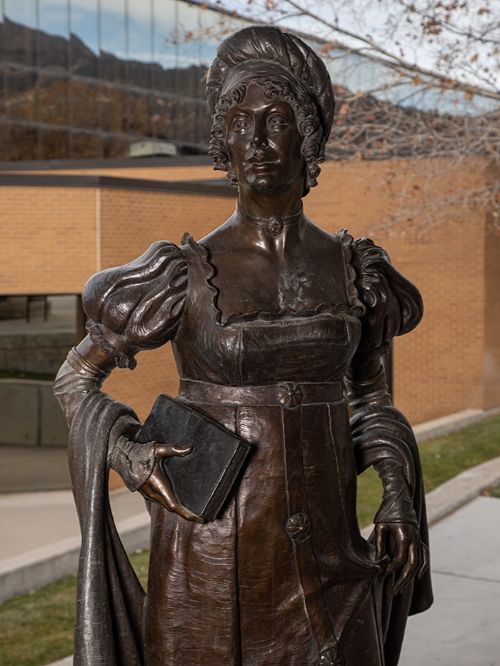
Germaine de Staël
1766-1817
A woman of exceptional gifts and talents, Germaine de Staël was one of the most remarkable women of letters in her own or any time. She wrote novels, plays, poetry, history, literary criticism, moral and political essays, and autobiographical memoirs. Her literary importance, however, is far exceeded by her importance in the history of ideas. Her precocious appetite for ideas on several subjects and her intellectual intensity represent her most outstanding qualities. Her unbounded enthusiasm and the intensity of her affections gave force and color to her rich and versatile character. Madame de Staël had a clear vision of wider issues and of the achievements of civilization and its cultures. Her involvement in the events of her time put her in a position from which to view and react to the events of the French Revolution and to affect the transition from Neoclassicism to Romanticism. At the time of her death, she was the most important woman in Europe.