

Dietetics Program
Master of Science/Didactic Program in Dietetics (MS/DPD)
Program Highlights:
- 4+1 Graduate, Didactic Program – Earn 2 Degrees in 5 years (Bachelor's & Master's)
- On-campus/face-to-face courses with block schedule
- Meets all knowledge requirements for dietitian exam
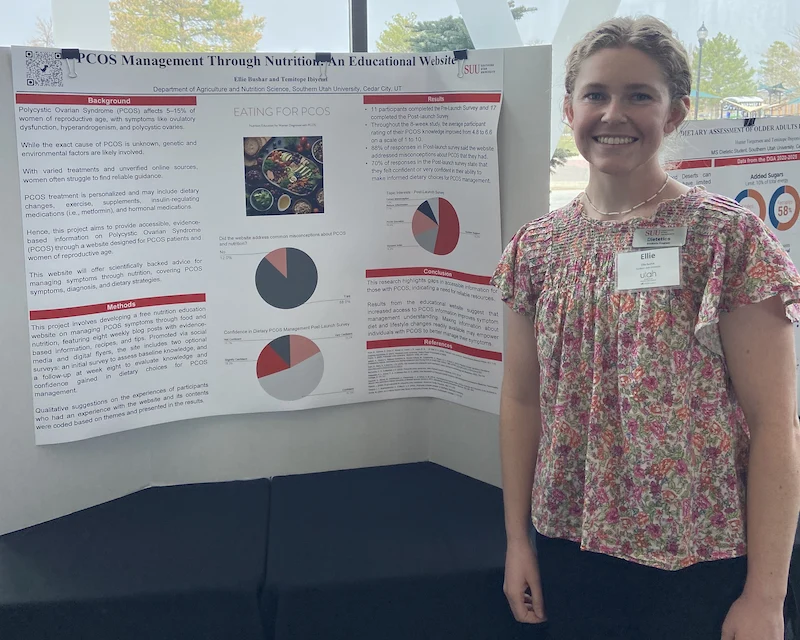
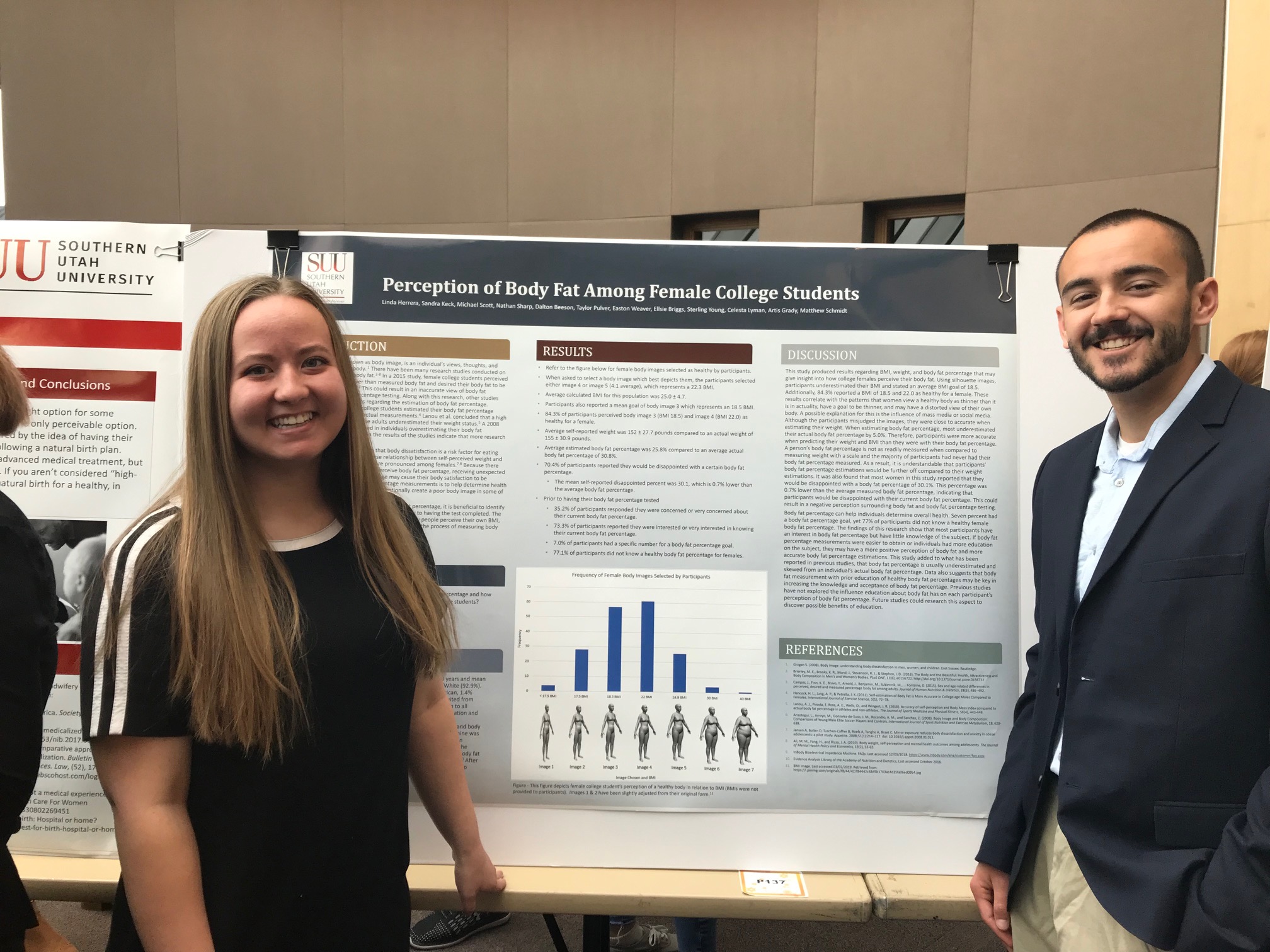
This intensive 5 year MS/DPD program is targeted toward undergraduate students who are seeking a graduate path to becoming a Registered Dietitian Nutritionist (RDN). A Didactic Program in Dietetics (DPD) refers to an academic program designed to meet the knowledge requirements for dietetics practice. The curriculum provides coursework including eating disorder and medical nutrition therapy, food sustainability, nutritional biochemistry, management, counseling, professionalism, and capstone research. Two food labs exploring culture and food science supplement coursework with experiential learning.
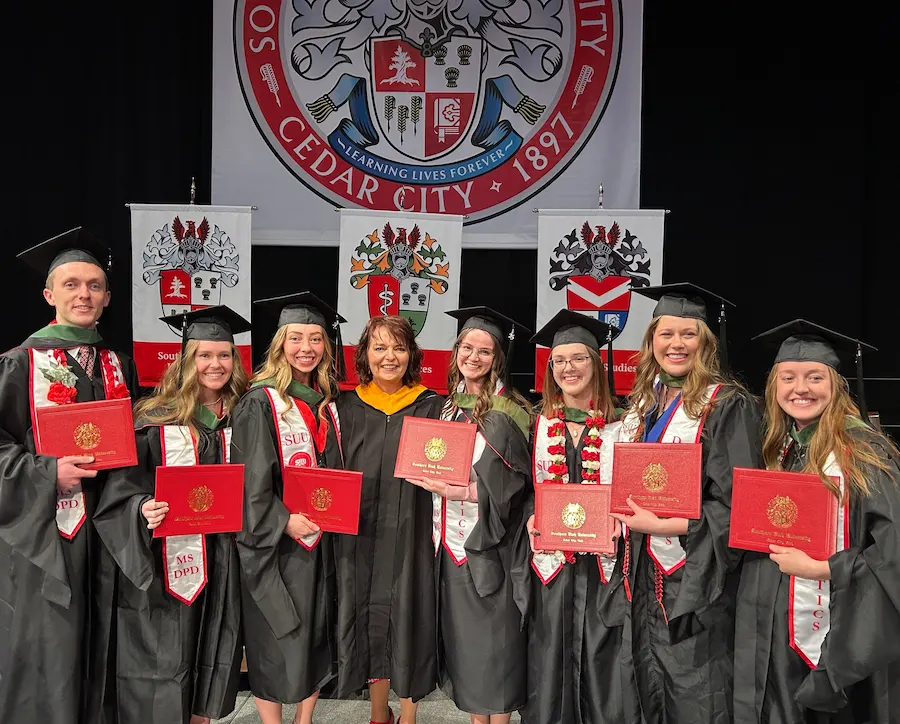 After completing all pre-requisite courses, students apply for the program the spring semester of their third year. In the 3rd year or later of undergraduate studies, after completing all pre-requisite courses, student apply to the dietetic program. Once accepted into the program, students participate in a lockstep, face-to-face, full-time schedule for 2 years (4 semesters). At the end of the 1st year of the two-year program, and upon completion of program and graduation requirements, a Bachelor of Science in Nutrition will be awarded. At the end of the 2nd year and upon completion of all program and graduation requirements, a Master of Science in Nutrition and Dietetics and a Didactic verification statement will be awarded. The program will help students prepare to apply for Dietetic Internship the fall of the 2nd year. SUU's Dietetic program does not offer a Dietetic Internship. Please visit eatrightpro.org for internship options, and navigate to Program Type, and select Dietetic Internships.
Previous bachelor’s degree credits cannot be applied towards this program. The program does not award credit for prior learning experiences.
Dietetics Program Information
A Registered Dietitian Nutritionist is a Food and Nutrition expert who has met academic and professional requirements including:
- Earned a master's degree with course work approved by the Academy of Nutrition and Dietetics Accreditation council for Education in Nutrition and Dietetics (ACEND).
- Completed a 1000 hour accredited, supervised practice program, a dietetic internship (DI), at a health care facility, community agency and foodservice corporation.*
- Passed a national examination administered by the Commission on Dietetic Registration (CDR)**
- Completes continuing professional education requirement to maintain registration on an ongoing basis.
* Dietetic Internships require students to utilize the Dietetics Inclusive Centralized application Services (DICAS), a web-based application service, for applying to Dietetic Internships. For more information, please visit the Academy of Nutrition and Dietetics Website.
** In most states, graduates also must obtain licensure or certification to practice. For more information about state licensure requirements, please visit the Commission on Dietetic Registration Website. SUU MS Dietetic program meets the coursework requirement for the national registration exam required for state licensure or certification.
Source: Academy of Nutrition and Dietetics: Qualification of a Registered Dietitian Nutritionist
Program Completion Requirements:
- To achieve a DPD verification statement, students must pass all KRDN assessments with a 75% or higher, pass all program courses with a B-or higher and demonstrate professional and ethical behaviors and academic integrity.
- The lock-step program requires all courses to be completed in a specific, scheduled order. While the program is designed for completion within two (2) years, students have a maximum of five years to complete all program and graduation requirements, allowing for an approved leave of absence (up to five semesters). Learn more about deferment at SUU.
Graduation Requirements:
- To achieve a Bachelor of Science in Nutrition degree, students must complete all program courses with a B- or higher and meet all university graduation requirements including maintaining a semester and cumulative 2.0 GPA or higher.
- To achieve a Master of Science in Nutrition degree, students must complete all graduate program courses with a B- or higher and meet all university graduation requirements including maintaining a semester and cumulative 3.0 GPA or higher.
SUU’s Master of Nutrition and Dietetics program is an accelerated 4+1 graduate program. Application for this program is competitive and based on review of all application materials. To be eligible for admission, students must have:
- Undergraduate cumulative GPA of 3.0 or above on a 4.0 scale.
- A cumulative GPA of 3.0 on a 4.0 scale on all “Prerequisite Courses” with no course grade less than a C (C- is not accepted).
- Completed all pre-requisite courses (Please review Dietetics Program Curriculum Map Years 1-3)
- Completed 5 dietetic related experiences, paid or volunteer, totaling 50 hours. Dietetic Program Portfolio Experience Options.
Maximum enrollment in the Dietetic Program is 12 students per year, so completion of all admission requirements will not guarantee acceptance into the program.
Application Process:
Applications to the Dietetic Program are accepted once a year. The application deadline is 1 pm on the 2nd Friday in January. Each individual's application will not be reviewed until all application materials have been received. All applications will be reviewed, and admission determined by the selection committee. Provisional admission is made, and notifications are sent by email by March 1st. Students will reply by March 15th to the offer of admission, via the application portal. This allows for timely student registration for upcoming fall courses. To be officially admitted to the dietetics program, all those receiving provisional admission must successfully complete prerequisite courses (maximum 18 credits) taken during spring/summer semester. If these courses are taken at an institution other than SUU, students must submit official copies of their transcripts containing their spring semester grades. The committee will review spring/summer transcripts and make final admission decisions. Please note a GRE is not required.
Southern Utah University’s mission is to provide an exceptional educational experience. As a campus focused on supporting a growing diverse student body, we encourage applications from students with differing experiences, perspectives and backgrounds. In our application process, we do not discriminate based on race, religion, national origin, color, sex (gender), age, disability, marital, pregnancy or pregnancy related conditions, childbirth, veteran, sexual orientation, sexual identity, size and/or other legally protected status, unless otherwise required by law.
The MS/DPD program fully complies with Utah state law 53B-1-116 (effective July 1, 2024) by maintaining an admissions process that neither requires nor considers statements addressing applicants' views on diversity, equity, or inclusion. Our program grants no preferential consideration to applicants who voluntarily provide information related to personal identity characteristics or diversity perspectives, and all admissions decisions are based solely on academic qualifications, applicable experience, and other identity-neutral criteria that predict success in the dietetics field. We focus exclusively on academic preparedness, relevant experience, and demonstrated interest in the dietetics profession to ensure fair, objective evaluation of all applicants per state law.
In the application you will provide the following information:
- Personal Statement-
Describe your career aspirations - up to 250 words.
Explain your personal characteristics, skills, values, or experiences that will contribute to the program and dietetic profession - up to 500 words. - Dietetic Experiences: a minimum of 5 different experiences (1 dietitian job shadowing, 2 nutrition and 2 nutrition or non-nutrition experiences). Dietetic Program Portfolio Experience Options.
- Recommendation from 2 employers or volunteer supervisors:
Provide their name and email - CANNOT be a nutrition instructor. A recommendation form will be emailed to them – letters will NOT be accepted. The application portal will indicate when the recommendation has been received. - Academic Advisor Pre-requisite Course Completion Verification – requires meeting with your advisor after fall grades are posted (NFS 1000 Intro to Dietetics and NFS 3040 Nutrition Assessment required before applying to the program).
- Not completed a previous bachelor's degree
- Confirmation that you have read/understand all the information about the program on the website, including the policies and procedures.
- Confirmation that you have read the Dietetic Program Technical Standards.
Online Application (opens Oct 1st - the application portal can be entered and exited as many times as needed to add information) : Apply Now
Application Instructions:
- Complete the Personal Information and Citizenship Sections
- Application Selection: Select Masters, Doctorate or Postgraduate Program
- Student Type: New Postgraduate
- How do you want to take classes: On Campus Only
- Select Your Program of Interest: Master of Science - Nutrition and Dietetics
- After fall grades are posted, meet with your academic advisor in person or via zoom. They will submit to the application portal, proof that all of your prerequisite courses have been completed with a C or higher.
Applicants will be notified by email by the 2nd Friday of February if they have been chosen to continue the application process.
Review SUU's Tuition Rates
Dietetic Program Year 1 - All credits, including graduate credits, are at the undergraduate rate. To be Pell grant eligible, students must take 12 undergraduate credits each semester. To see estimated costs, and other Financial Aid information visit SUU's Financial Aid FAQ under the section “What does college cost”.
Textbooks:
- Fall: $350
- Spring: $350
Additional Program Costs:
- Academy of Nutrition and Dietetics Student Membership - $60/year Semester Fall
 Dietetic Program Year 2 – Graduate Tuition MSDPD
Textbooks:
- Fall: $350
- Spring: None
Additional Program Costs:
- Academy of Nutrition and Dietetics Student Membership - Semester Fall $60
- Dietetic Internship Application Fees $100 Fall Semester
The program courses are completed on campus during fall and spring semesters for two consecutive years. Classes in the program will be face-to-face, lockstep-taken in the assigned semester. Some credit hours will be formatted in a hybrid learning experience. All semesters have a full-time course load. Some summer Capstone Project work may be required between year 1 and year 2.
The block schedule has been created for the benefit of students to work, do homework, and organize child care utilizing a hybrid format for some of the 3 credit courses ( 2 credit hours will be face to face and 1 credit hour will be asynchronous/online)
Students will need to demonstrate knowledge of basic computer operations, navigate the internet, use software such as Microsoft Office, Google Drive and Canvas, and be able to manage files and folders.
Technology requirements include:
- Computer, with webcam and microphone
- Reliable internet access
- Google Chrome Web Browser
- Zoom and Productivity Suite (access provided by the university)
Dietetics Program Curriculum Map
Fall Semester (16 Credits)
- NFS 1020 Nutrition Foundations (3 credits)
- BIOL 1610/15 Gen Biology & Lab (4 credits)
- *GE- ENGL 1010 (3 credits)
- *GE American Institutions (3 credits)
- (Math 1010 (4 credits) may be needed if Math ACT Score is less than 23)
- Elective (3 credits)
Spring Semester (15 Credits)
- NFS 1000 Intro to Dietetics (1 credit)
- NFS 2020 Nutrition in the Life Cycle (3 credits)
- BIOL 1620/25 Gen Biology II & Lab (4 credits)
- Math 1040 Statistical Inference (Math GE) (4 credits)
- Choose 1 of the following (Social Sci GE):
- ANTH 1010 Cultural Anthropology (3 credits)
- PSY 1010 Gen Psychology (3 credits)
- SOC 1010 Intro to Sociology (3 credits)
Fall Semester (16 Credits)
- NFS 2140 Nutrition Infant & Child (3 credits)
- Biol 2320/25 Human Anatomy & Lab (4 credits)
- CHEM 1110/15 Elem Chemistry & Lab (4 credits)
- *GE - Fine Arts (3 credits)
- KIN 2010 Medical Terminology (2 credits)
Spring Semester (17 Credits)
- BIOL 2420/25 Human Physiology & Lab (4 credits)
- NFS 2480 Intuitive Eating (3 credits)
- CHEM 1120/25 Elem Organic Bio-Chem/Lab (6 credits)
- *GE- ENGL 2010 (3 credits)
- *GE- INFO 1010 (1 credit)
Fall Semester (16 Credits)
(Can currently be enrolled in prerequisite courses when applying)
- NFS 3040 Nutrition and Assessment (3 credits)
- BIOL 2060/65 Microbiology & Lab (4 credits)
- GE - Humanities Elective (3 credits)
Choose 1 of the following:
- SOC 3450 Applied Research Methods (3 credits)
- KIN 4020 Research Methods in Exercise Science (3 credits)
- SW 3600 Research Methods in Social Sciences (3 credits)
Upper Division Elective (3 credits)
Spring Semester (17 Credits)
Application to the Dietetic Program
- NFS 3020 Sports Nutrition (3 credits)
- BIOL 3060/65 Genetics & Lab (4 credits)
- KIN 3070/75 Exercise Physiology/Lab (4 credits)
- Elective (3 credits)
Fall Semester (15 credits) (13 + 1 Graduate Credits)
Start of the Dietetic Program and Graduate Courses
(Courses taken in order as listed)
(Students pay undergraduate tuition for graduate credits in this year)
- NFS 4000 Dietetic Professionalism I (1 credit)
- KIN 4080 Obesity & Weight Management (3 credits)
- NFS 4100/4105 Exploring Culture in Nutrition/Lab (3 credits)
- Utah state law 53B-1-118 does not restrict or prohibit curriculum content related to diversity, equity, or inclusion as expected or required by our accreditor, ACEND. The law explicitly exempts "academic course teaching in the classroom" (Section 53B-1-118(10)(c)) and "requirements necessary for accreditation compliance" (Section 53B-1-118(10)(a)) from its prohibitions. Therefore, our program can and will continue to include all ACEND-required curriculum components related to cultural competence, health equity, and serving diverse populations, ensuring our students receive the complete education necessary to meet all accreditation standards.
- NFS 4481 Community Nutrition: Dietetics (3 credits)
- NFS 6991 Capstone Project I (1 credit)
- Electives (3 credits)
- Upper Division Elective (3 credits)
To be Pell Grant eligible, 12 undergraduate credits are required each semester
Spring Semester (18 credits) (10 + 8 Graduate Credits)
- NFS 4240 Food Sustainability Seminar (1 credit)
- NFS 4700 Eating Disorders Nutrition Therapy (2 credits)
- NFS 4990 Senior Seminar: Dietetics (1 credit)
- NFs 6200/05 Food Science & Lab (4 credits)
- NFS 6992 Capstone Project II (1 credit)
- NFS 6040 Nutrition Counseling: Dietetics (3 credits)
- Elective (6 credits)
Pell Grants are calculated on 12 undergraduate credits. A percentage will be calculated if <12 credits.
120 undergraduate credits must be completed by the end of this semester to complete the bachelor’s degree
(Some Capstone Project work may need to be completed during the summer)
Fall Semester (11 credits)
Dietetic Graduate Program
- NFS 6000 Dietetic Professionalism II (1 credit)
- NFS 6020 Nutritional Biochemistry: Macronutrients (3 credits)
- NFS 6250 Foodservice (2 credits)
- NFS 6050 Medical Nutrition Therapy I (3 credits)
- NFS 6993 Capstone Project III (1 credit)
- NFS 6994 Capstone Project IV (1 Credit)
Spring Semester (10 credits)
- NFS 6030 Nutritional Biochemistry: Micronutrients (3 Credits)
- NFS 6300 Management in Dietetics (3 credits)
- NFS 6060 Medical Nutrition Therapy II (3 credits)
- NFS 6995 Capstone Project V (1 Credit)
Application to Dietetic Internships
| Graduate Nutrition: | 30 credits |
| Program and Prerequisite Courses: | 83 credits |
| Electives: | 24 credits (9 Upper Division) |
| General Education: | 13 credits |
| Total Credits | 150 Credits |
In some cases students may need to print a copy of the program curriculum map for advising purposes.
| Course | Title | Credits Per Semester |
|---|---|---|
| ANTH 3070 | Medical Anthropology | 3 |
| BIOL 3050 | Biomedical Ethics | 3 |
| COMM 4504 | Health Communication | 3 |
| ENGL 3120 | Grant & Technical Writing (Highly Recommended) | 3 |
| FLHD 4100 | Family Problems & Solutions | 3 |
| HRHM 3250 | International Cuisine | 3 |
| PSY 3270 | Motivation & Emotion | 3 |
| PSY 3600 | Stress and Pain | 3 |
| PSY 3650 | Health Psychology | 3 |
| SOC 3250 | Food & Culture | 3 |
Program Mission Statement
The mission of the Southern Utah University Master of Science/Didactic Program in Dietetics (MS/DPD) program is to prepare graduates for a dietetic internship and become dynamic Registered Dietitian Nutritionists. Experiential curriculum promotes critical thinking, develops professional communication skills, solidifies understanding of evidence-based nutrition practices, and prepares dynamic professionals that promote the health and well-being of all populations.
Program outcome data is available upon request by contacting the Program Director at RDNprogram@suu.edu.
Program Guide
Goal 1: Program graduates will utilize critical thinking skills and evidence-based nutrition knowledge in a dietetic internship or professional practice setting.
- Objective 1.1: At least 80% of students complete program requirements within 5 years (250% of planned program length)
- Objective 1.2: At least 80% of program graduates apply for admission to a supervised practice program prior to or within 12 months of graduation.
- Objective 1.3: Of program graduates who apply to a supervised practice program, at least 65% percent admitted within 12 months of graduation.
- Objective 1.4: The program’s one-year pass rate (graduates who pass the registration exam within one year of first attempt) on the CDR credentialing exam for dietitian nutritionists is at least 80%.
- Objective 1.5: At least 80% of responding graduates will indicate “prepared”** or higher that the program provided them with adequate evidence-based nutrition knowledge for a dietetic internship or professional practice setting.
- Objective 1.6: At least 80% of responding graduates will indicate “prepared” or higher that the program aided in the development of critical thinking skills for a dietetic internship or professional practice setting.
- Objective 1.7: At least 80% of responding graduates’ internship directors or employers will indicate “prepared” or higher on graduates’ overall evidence-based nutrition knowledge.
- Objective 1.8: At least 80% of responding graduates’ internship directors or employers will indicate “prepared” or higher on graduates’ overall critical thinking skills.
Goal 2: Program graduates will demonstrate professionalism and proficient communication skills in a dietetic internship or professional practice setting.
- Objective 2.1: At least 80% of responding graduates will indicate “prepared” or higher that the program aided in the development of professionalism skills for a dietetic internship or professional practice setting.
- Objective 2.2: At least 80% of responding graduates will indicate “prepared” or higher that the program aided in the development of communication skills for a dietetic internship or professional practice setting.
- Objective 2.3: At least 80% of responding graduates’ employers or internship directors will indicate “prepared” or higher on graduates’ overall professionalism skills.
- Objective 2.4: At least 80% of responding graduates’ employers or internship directors will indicate “prepared” or higher on graduates’ overall communication skills.
Graduation / Program Completion Requirements
Policy:
Program Completion Requirements:
To achieve a DPD verification statement, students must pass all KRDN assessments with a 75% or higher, pass all program courses with a B- or higher and demonstrate professional and ethical behaviors and academic integrity. Program requirements must be completed within five (5) years.
Graduation Requirements:
- To achieve a Bachelor of Science in Nutrition degree, students must complete all program courses with a B- or higher and meet all university graduation requirements including maintaining a semester and cumulative 2.0 GPA or higher.
- To achieve a Master of Science in Nutrition degree, students must complete all graduate program courses with a B- or higher and meet all university graduation requirements including maintaining a semester and cumulative 3.0 GPA or higher.
Procedures:
The lock-step program requires all courses to be completed in a specific, scheduled order. While the program is designed for completion within two (2) years, students have a maximum of five years to complete all program and graduation requirements, allowing for an approved leave of absence (up to five semesters).Verification Statement
Policy:To earn a Didactic Program in Dietetics (DPD) verification statement, all program courses must be completed with a B- or higher, all KRDN assessments completed with a score of 75% or higher, and students must demonstrate professional and ethical behavior and academic integrity.
Procedure: Upon program completion and masters degree conferral, a verification statement, with a digital signature, is generated and emailed to the student. A copy is also kept on file by the Program Director and the registrar’s office.
Credit for Prior Learning
Policy: SUU Dietetics Program may award transfer credit for prerequisite courses; however, transfer credit, undergraduate or graduate, is not accepted for program courses as KRDN assessments are embedded within program courses.
Assessment of Student Learning
Policy:
Student learning will be evaluated throughout the semester, including midterm and end of term.
Procedures:
- Course learning evaluation criteria will be outlined in the course syllabus as well as learning assessment instructions.
- Faculty provides students with grading feedback within 2 weeks of the due date excluding university breaks/holidays.
- Midterm and end of term grades aid in evaluation of student learning.
- Faculty report student learning to the Program Director at the end of each semester.
Student Performance Monitoring
Policy:
Student performance will be monitored consistently throughout the semester to provide for early detection of academic difficulty including professional and ethical behaviors and academic integrity of the student.
Procedure:
- Students are required to adhere to university and the dietetics profession code of conduct:
- Evaluation of student performance occurs throughout the academic program and at predetermined times as established in the course syllabus.
- Faculty provides students with grading feedback within 2 weeks of the due date excluding university breaks/holidays. Within one (1) week of identifying academic difficulty, the faculty:
- Sets up a meeting with the student
- Notifies the Program Director
- Documents the academic difficulty and the intervention plans including but not limited to faculty mentoring and monitoring and referral to university resources for academic success, i.e., the Tutoring Center, the Writing Center, Student Affairs and Counseling/Psychological Services. Documentation is completed in the program shared drive on the “Early Detection of Academic Difficulties” form
- The university’s Early Alert System may be utilized to access additional student support and resources.
- If the academic difficulty is related to substandard professional or ethical behavior or academic integrity, the faculty notifies the Program Director. The Program Director then:
- Sets up a meeting with the student and faculty
- Documents the academic difficulty and intervention plans including but not limited to Program Director mentoring and monitoring.
- If appropriate improvements are not made, the discipline policy will be followed.
- At the end of each course, faculty provides the Program Director with information to assist in student monitoring including KRDN completion, final course grade, and verification of professional/ethical behavior and academic integrity.
Student Remediation and Retention
Policy: Faculty will make remediation efforts with the students on an individual basis.
Procedure: If the Early Alert System is utilized, the Early Alert Response Team will reach out to the student within 1-3 business days and assess the needs of the student and connect them with academic, mental, emotional, and/or social support and resources.
The Program Director will review all students’ progress at the end of each semester and make a plan of progress with the student.
For more information visit the Program Retention and Remediation Policy section.
Student Support Services
Program Retention and Remediation
Policy:
To help retain students in the program, remediation attempts for KRDN assessments and course completion are offered. Three (3) remediation attempts are provided to complete the KRDN assessment with a 75% or higher. One (1) remediation attempt is provided to complete program courses with a B- or higher.
Procedure:
KRDN Remediation:
- Faculty provides KRDN evaluation criteria in the assessment instructions.
- Faculty provides evaluation of KRDN assessment within 2 weeks of the due date excluding university breaks/holidays.
- Within one (1) week of identifying that the KRDN was not met with a 75% or higher, the faculty:
- Sets up a meeting with the student
- Notifies the Program Director
- Documents the KRDN remediation method in the Dietetic Program shared drive: “KRDN Remediation” document
- Remediation methods may include but are not limited to repeating the same assessment or an alternative assessment: assignment, quiz, exam, verbal report.
- Remediation may not result in a grade adjustment
- Remediation methods may include but are not limited to repeating the same assessment or an alternative assessment: assignment, quiz, exam, verbal report.
- If the 1st remediation attempt is unsuccessful, the faculty will provide one additional remediation attempt completed within 1 week of the 1st attempt.
- If the 2nd remediation attempt is unsuccessful, within one (1) week, the faculty will document the attempt and notify the Program Director.
- Within one (1) week, The Program Director:
- Sets up a meeting with the student
- Administers and documents the final remediation attempt
- If the 3rd remediation attempt is unsuccessful, the student’s enrollment in the program will end.
Course Remediation:
- Courses not completed with a B- or higher may be repeated once.
Disciplinary/Termination Procedures
Discipline Policy:
Students may be placed on academic probation for reasons including but not limited to: substandard academic performance, including professional and ethical behaviors and academic integrity, failing a program course, or not maintaining a GPA of 3.0 as a graduate student.
Termination Policy:
Program enrollment will be terminated if a student does not pass a program course with a B- or better after the remediation attempt or pass a KRDN assessment with a 75% or higher after the 3rd remediation attempt, or unresolved substandard professional and ethical behaviors and academic integrity.
Procedures:
- If appropriate improvement in academic performance is not evident, the Program Director, with faculty input, may decide to place the student on academic probation for one (1) semester.
- If the student does not meet improvement plan or program requirements, including passing KRDN assessments, program enrollment will be terminated. The Program Director:
- Sets up a meeting with the student to notify them of termination
- Documents the justification for the termination in the “Early Detection of Academic Difficulties” shared drive
- Counsels student on alternative education paths including but not limited to:
- If termination occurs during the 1st year of the program, degree emphasis may be changed to Allied Health leading to a Bachelor of Science in Nutrition degree.
- If termination occurs during the 2nd year of the program, students may consider another graduate dietetic program or the university’s Master of Interdisciplinary Studies Program
- Aids the student in meeting with their academic advisor and the college career coach.
- Notifies the University Registrar of student program termination.
Program Schedule, Vacations, Holidays and Leave of Absence
Policy:
Program courses are completed on campus during Fall and Spring semesters for two (2) consecutive years. Application for a leave of absence may extend program completion to five (5) years. Student vacations and holidays follow the university calendar.
Procedures:
To request a program leave of absence:
- Complete the University’s Leave of Absence Application:
- Send a written request to the Program Director.
- At the end of the leave of absence, follow university procedures and submit a formal written request to the Program Director within 30 days of the new semester’s start.
Program Withdrawal
Policy:
A student may choose to withdraw from the program.
Procedure:
- Before withdrawing from the program, a student may consider applying for a leave of absence (See Leave of Absence Policy section).
- If a student decides to withdraw from the program, a written statement of withdrawal must be submitted to the Program Director prior to the start of the next semester.
- Include in the statement the effective date and reasons for program withdrawal.
- A student may submit a written request to the Program Director of readmittance to the program within four (4) years of withdrawal.
- To officially withdraw from the university, please visit the Student Outreach and Support Website and contact the Office of Financial Aid and Scholarships.
Student Identity Verification
Policy: The university’s technology and information systems are secure and are also protected by FERPA protocols.
Procedure: The following methods are used to confirm student identity:
- Students access Canvas via the university portal using two-factor authentication.
- The Testing Center requires photo identification.
- Online exam proctoring has security settings including student ID verification and visual recording.
Distance Education
Policy:
The dietetic program utilizes a hybrid model. While most classes are conducted in person, they are supplemented by asynchronous online components. Success in this format requires access to reliable technology.
Procedure:
- Computer: A laptop or desktop is required. While tablets and smartphones are useful for reading or messaging, they are insufficient for completing assignments.
- Reliable Internet: High-speed internet is essential for virtual meetings and course stability. A minimum speed of 1.3 Mbps (upload/download) is required for Zoom participation.
- Webcam & Audio: A functional webcam and microphone are required.
- Google Chrome: SUU utilizes Canvas as its Learning Management System. Google Chrome is the required browser.
- Zoom: Student have free access to Zoom license. See SUU Portal under the "Resources" menu.
- Productivity Suites: Students have free access to Microsoft 365 and the Google Productivity Suite. Contact the SUU Help Desk for installation assistance.
Student File Access
Policy:
Under the federal Family Educational Rights and Privacy Act (FERPA), students have certain rights with respect to their education records.
Procedure:
- Student sends an email request to the Program Director to access their student file.
- The Program Director schedules an appointment with the student within seven (7) days of receiving the request.
- The Program Director meets with the student to review the file.
Student Information Protection
Equitable Treatment
Policy: As a program and university, we provide a supportive educational environment that meets the needs of diverse students from varying backgrounds. We do not discriminate based on race, religion, national origin, color, sex (gender), age, disability, marital, pregnancy or pregnancy related conditions, childbirth, veteran, sexual orientation, sexual identity, size, socioeconomic status and/or other legally protected status, unless otherwise required by law. https://www.suu.edu/policies/05/27.html
Students are supported in their needed accommodations, including pregnancy or pregnancy related conditions, through the Disability Resource Center to aid in academic success.
Program Complaint Process
Policy: Students have an option to file a program complaint.
Procedure:
- If the complaint is related to a course, Students are recommended to first discuss the issue with the instructor.
- If the issue remains unresolved or is a program issue, Students are then recommended to discuss issues with the Program Director and if needed schedule a meeting for formal discussion of the issue.
- Students are recommended to first discuss issues with the Program Director on an informal basis. This should occur within two (2) weeks of the occurrence of the incident or discovery of the problem.
- If unresolved, the complaint should be taken to the Department Chair and then on to the Dean of the College of Health Sciences, if needed. If a resolution has not been yet reached, the student may direct their complaint to the Office of Vice President for Student Affairs.
- Once the Program Complaint Process at the university level has been exhausted related specifically to program noncompliance with accreditations standards, complaints may be filed directly with ACEND. To prevent retaliation, students will remain anonymous if desired.
Records of program complaints, including the resolution of complaints, are maintained for a period of no less than seven years.
Submission of Program Complaints to ACEND
Once the Program Complaint Process has been exhausted related specifically to program noncompliance with accreditations standards, complaints can be filed directly with ACEND.
Accreditation Statement
Southern Utah University's Master of Science Didactic Program in Dietetics has been granted candidate status by the Accreditation Council for Education in Nutrition and Dietetics.
120 South Riverside Plaza, Suite 2190, Chicago, IL 60606-6995, US
312-899-0040 ext. 5400
https://www.eatrightpro.org/acend